
Everything You Need to Know About EPDs: All Questions Answered
Everything You Need to Know About EPDs: All Questions Answered
What is an Environmental Product Declaration?
An EPD is a standardised, third-party verified report that discloses the environmental impacts of a product across its life cycle — from raw material extraction through to end of life. It follows rules set by Product Category Rules (PCRs) and is aligned with international standards such as ISO 14025 and EN 15804.
An EPD does not say a product is “green.” It quantifies and declares the footprint — global warming potential, water use, waste generation — so that buyers can make informed decisions. It is a disclosure tool, not a performance label.
How is an EPD different from an LCA report or a sustainability certificate?
These three terms are often used interchangeably, but they are not the same thing.
- LCA report — A Life Cycle Assessment study. It can be confidential, internal, and does not need to follow a public PCR or be verified by a third party. It is the technical foundation that an EPD is built on.
- EPD — A public, PCR-based, third-party verified declaration of LCA results. It follows a fixed format so that products can be compared.
- Sustainability certificate or eco-label — Typically sets a performance threshold. A product either meets it or does not. An EPD sets no such threshold — it simply reports the numbers.
Why are EPDs important for construction and manufacturing in the UAE?
Construction materials — particularly concrete and steel — are among the largest sources of embodied carbon in any building. As green building frameworks in the UAE (Estidama, Dubai Green Building Regulations) increasingly favour products backed by credible environmental data, EPDs become the primary evidence base for specification, procurement, and compliance.
For manufacturers, EPDs open doors to projects where sustainability data is expected. For developers and contractors, they provide the quantified input needed to meet green building credits and satisfy client requirements.
Is EPD mandatory in the UAE?
Not currently across the board. UAE frameworks such as Estidama and Dubai Green Building Regulations increasingly favour or implicitly encourage products with EPDs, but outright mandates remain limited at the federal and emirate level.
However, the direction of travel is clear. Policy discussions at the national level recommend introducing embodied-carbon requirements and explicitly promoting EPD use for construction products as part of net-zero alignment. Companies that build EPD capability now are better positioned when requirements tighten.
Get Free EPD Consultation With Our Experts
Are EPDs mandatory anywhere in the GCC?
No GCC country has introduced a blanket EPD mandate comparable to what is emerging in Europe. Uptake across the region is driven primarily by green building standards and international client expectations. Saudi Arabia and the UAE lead in EPD availability, but adoption remains at a medium-to-low level compared with European or Australian markets.
How much does EPD certification cost in Dubai or the UAE?
The cost of developing an Environmental Product Declaration (EPD) is not fixed and can vary significantly depending on several factors, including the selected program operator, verifier fees, the number of EPDs to be published, and the complexity of the product and supply chain. As a result, EPD costs can range widely. In most cases, total costs typically fall between AED 15,000 and AED 45,000, depending on project scope and verification requirements.
Additional costs may arise when technical documentation is incomplete, when multiple product variants are included under one declaration, or when several rounds of verifier review are required. Careful preparation of internal data and clear product structuring at an early stage remains the most effective way to control overall costs and timelines.
At Planet First Consultants, we intentionally provide more affordable and transparent pricing than the market average in the UAE. Our mission is to make sustainability and EPDs accessible to organisations of all sizes, including small and medium-sized enterprises. This is achievable due to our strong industry presence, long-term working relationships with accredited program operators and verifiers, and the efficiency of our expert consulting team, allowing us to deliver high-quality EPDs at competitive costs.
What drives the cost of an EPD up or down?
The main cost drivers are:
- Product complexity — A single-material product is cheaper to model than a multi-component system or a composite façade.
- Number of variants — One EPD covering a product family costs less per product than individual declarations.
- Data quality — Poor or incomplete internal data forces more verifier rounds and additional modelling effort.
- Verification rounds — Each round of feedback adds time and cost. Well-prepared documentation reduces this significantly.
- Programme operator fees — Registration and verification fees vary by operator and region.
How long does it take to get an EPD?
A straightforward EPD — single product, good data, experienced team — typically moves from kick-off to publication in two to six months. Complex products, multi-site averages, or slow primary-data collection commonly push timelines beyond six months.
Verifier availability is an increasingly common bottleneck. Popular programme operators can have queues that delay publication even when the LCA work is complete.
What data do I need to produce an EPD?
The core requirement is plant-level, primary data covering:
- Energy consumption and fuel types
- Raw materials (quantities and origins)
- Water use
- Waste streams (type and disposal route)
- Transport distances (inbound and outbound)
- Packaging materials
Secondary data from generic databases can fill gaps where primary data is unavailable, but over-reliance on it weakens the EPD during verification. Under EN 15804+A2, additional detail on end-of-life scenarios and recycling assumptions is also required.
What is EN 15804+A2 and does it apply in the UAE?
EN 15804+A2 is the current European standard for construction-product EPDs. It is mandatory for new EPDs in Europe and expands the scope beyond earlier versions by requiring more impact categories, more detailed end-of-life modelling, and Module D (benefits beyond system boundary) reporting.
It does not formally apply in the UAE, but it is the most widely recognised framework internationally. Any EPD intended for credibility with European clients, LEED, or BREEAM should align with EN 15804+A2. For UAE-based manufacturers targeting international markets, this is the safest and most future-proof standard to follow.
Get Free EPD Consultation With Our Experts
Which standard should my EPD follow?
For international credibility — particularly in Europe or for projects using LEED or BREEAM — EN 15804+A2 is the benchmark. ISO 14025 governs the overall EPD format. ISO 14040 and ISO 14044 govern the underlying LCA methodology.
If your market is exclusively domestic GCC, there is currently no single equivalent mandate. However, EN 15804 alignment remains the strongest position, both for comparability and for anticipating future regional requirements.
Can I compare two EPDs directly?
Only with caution. Two EPDs are meaningfully comparable only if they follow compatible PCRs, use consistent system boundaries (the same life-cycle modules), and draw on comparable background datasets.
In the GCC, where region-specific background data is still maturing, differences in methodology can be as significant as differences in the products themselves. Always scrutinise the technical assumptions before making procurement or design decisions based on EPD numbers alone.
What is the difference between an industry-average EPD and a product-specific EPD?
- Industry-average EPD — Represents a typical product within a category, based on aggregated or generic data. Useful for early-stage benchmarking but does not reflect a specific manufacturer’s actual footprint.
- Product-specific EPD — Based on primary data from a named manufacturer’s production process. It reflects real performance and carries more weight in procurement decisions, LEED optimisation tiers, and embodied-carbon comparisons.
Most clients and rating systems that are moving toward embodied-carbon limits prefer or require product-specific EPDs.
How does EPD certification work, step by step?
The process follows a clear sequence:
- Scoping — Define the product, system boundary, functional unit, and geographic scope. Decide whether you need a single-product, product-family, or plant-specific EPD.
- PCR selection — Identify the correct Product Category Rules for your material under the chosen programme operator.
- Data collection — Gather primary data from your manufacturing site and, where possible, from upstream suppliers.
- LCA modelling — A qualified practitioner models the environmental impacts using accepted tools and databases.
- EPD drafting — Results are presented in the standardised EPD format with full supporting documentation.
- Third-party verification — An independent verifier reviews methodology, data, and calculations for conformance.
Who verifies EPDs in Saudi Arabia or the UAE?
EPDs are not verified by a country-specific authority. Verification is carried out by independent third-party bodies appointed through the chosen EPD programme operator — which may be based anywhere in the world. Operators such as the International EPD System, IBU, or BRE all appoint qualified verifiers who can review EPDs for products manufactured in the GCC.
The verifier checks that the LCA methodology, data, and declarations conform to the relevant PCR and standard. They do not certify that a product is better than a competitor — they confirm that the EPD is technically sound.
Get Free EPD Consultation With Our Experts
Which EPD programme operators are accepted in the GCC?
No single operator is mandated across the GCC. The most widely recognised operators for construction products internationally include:
- International EPD System — Strong global reach, fully digital EPD platform.
- IBU (Institut für Bauumwelt) — Germany-based, operates IBU.data, well-established in Europe and increasingly referenced internationally.
- BRE — UK-based, recognized in BREEAM-driven markets.
For companies selling into both Europe and the GCC, choosing an operator with broad international recognition and a digital platform offers the best coverage. Some public procurement frameworks and rating systems reference specific operators, so it is worth checking requirements before registering.
Does it matter which programme operator I choose?
Yes. The choice affects where your EPD is visible, which rating systems will accept it, and how easily it integrates into digital procurement workflows. Some operators have stronger presence in specific regions or rating ecosystems.
If your products move across borders — say, from UAE manufacturing to European project sites — an operator with international reach and a machine-readable digital format will serve you better than a purely national one.
What happens during third-party verification?
The verifier reviews your complete EPD package — the LCA report, data quality assessments, modelling files, plant datasets, and quality records — and checks them against the PCR and applicable standards.
Common areas of scrutiny include allocation choices, energy balance consistency, cut-off decisions, and upstream supplier data gaps. Organisations that present clean, well-organised documentation typically experience fewer rounds of feedback and lower verification costs.
How do I keep verification costs under control?
Three practices make the biggest difference:
- Prepare documentation thoroughly before submission. Incomplete or inconsistent files are the primary cause of additional verification rounds.
- Build internal data systems first. If you cannot pull reliable plant-level energy, material, and waste data, the verifier will find the gaps.
- Engage an experienced EPD consultant like Planet First Consultant early. They will flag issues before the verifier does — and verifier time is the cost you want to minimise.
Get Free EPD Consultation With Our Experts
What are the main challenges of getting EPDs in the GCC?
The key barriers identified in the region include:
- Cost relative to project margins — Particularly for smaller manufacturers or lower-volume products.
- Limited internal LCA expertise — Most GCC manufacturers do not have in-house life cycle assessment capability.
- Fragmented supply chains — Especially for imported materials, upstream data is difficult to obtain.
- Gaps in region-specific background data — Generic databases often do not reflect Gulf electricity mixes, transport patterns, or end-of-life conditions accurately.
- Comparability issues — Existing GCC EPDs for concrete and steel vary in methodology and background data, making direct comparison unreliable without technical review.
Why do EPD comparisons in the GCC sometimes give misleading results?
EPDs for the same material category can produce very different GWP numbers — not because the products are fundamentally different, but because the underlying assumptions differ. Background electricity data, transport assumptions, recycling rates, and system boundaries all influence the final figure.
In the GCC, where many EPDs rely on European or global default datasets rather than region-specific ones, these differences can be substantial. This is not a flaw in the EPD system — it is a known limitation that requires careful technical interpretation before any procurement decision is made.
How do EPDs work with LEED and BREEAM?
Both systems use EPDs, but in different ways.
- LEED v4.1 links EPD use to embodied-carbon optimisation. Collecting qualifying EPDs counts as disclosure, but separate pathways reward actual GWP reduction relative to a baseline. Product-specific, lower-GWP EPDs carry more weight in these optimisation tiers.
- BREEAM embeds EPD data into whole-building LCA tools. The EPD feeds into a broader environmental assessment of the building, rather than being credited as a standalone action.
Simply collecting EPDs does not automatically earn significant points in either system. The data needs to demonstrate real environmental improvement to score well.
What is a digital EPD and why does it matter?
A digital EPD is a machine-readable version of the declaration — structured in formats such as ILCD+EPD or EN ISO 22057 — rather than a static PDF. Programme operators like IBU and the International EPD System are now offering fully digital EPD platforms.
Digital EPDs can feed directly into BIM tools, procurement databases, and automated embodied-carbon calculation workflows. As building regulations move toward mandatory whole-life carbon reporting, machine-readable EPD data will become significantly more valuable than a PDF that requires manual data entry.
Will future regulations require digital EPDs?
The trend points strongly in that direction. The revised EU Energy Performance of Buildings Directive requires Member States to calculate whole-life carbon for new buildings, and EPDs are the primary data source for that calculation. Automating that data flow — rather than relying on manual extraction from PDF documents — is a clear priority for programme operators and regulators alike.
For GCC markets, no digital EPD mandate exists yet, but investing in digital-ready formats now avoids rework later and makes your EPD data more useful to project teams performing whole-building assessments.
Get Free EPD Consultation With Our Experts
How often do I need to update my EPD?
EPDs have a standard validity period of five years. Within that window, you should plan updates if any of the following change materially:
- Energy source or electricity mix at your plant
- Raw material suppliers or recycled content percentages
- Production processes or plant efficiency
- A new version of the relevant PCR is published
Organisations that maintain good internal data systems can update EPDs more quickly and at lower cost than those that treat each EPD as a standalone project.
What are the most common mistakes companies make with EPDs?
- Assuming an EPD is a green certificate. It is not. It declares environmental impact — it does not guarantee low impact.
- Comparing EPDs without checking compatibility. Different PCRs, boundaries, and datasets can make a direct numerical comparison misleading.
- Treating the EPD as a one-off marketing exercise. Companies that do not maintain internal data systems struggle with renewals, accuracy, and credibility over time.
- Confusing verification with certification. A verifier confirms technical conformance. They do not rank or certify products as environmentally superior.
- Ignoring regional data gaps. In the GCC, using European default data without adjustment can produce inaccurate results for local conditions.
When should I work with an EPD consultant?
An EPD consultant adds clear value when:
- Your team lacks internal LCA or life-cycle expertise.
- You are navigating a PCR or programme operator for the first time.
- Your supply-chain data is fragmented or incomplete.
- You need to align EPD strategy with LEED, BREEAM, Estidama, or regional procurement requirements.
What should I look for in an EPD consultant in the UAE or GCC?
The key criteria are:
- Demonstrated experience with construction products and the relevant PCRs.
- Familiarity with EN 15804+A2 and the standards that govern EPD methodology.
- Understanding of regional frameworks — Estidama, Dubai Green Building Regulations, and GCC-specific data and supply-chain realities.
- A track record of successful verifications, not just EPD drafting.
Willingness to help you build internal data governance, rather than simply delivering a finished document.
What should I do first if I want to start the EPD process?
Three steps, in order:
- Identify your highest-priority product lines. Focus on high-volume, high-impact materials — ready-mix concrete, steel reinforcement, major envelope systems. This is where an EPD delivers the most commercial and environmental value.
- Audit your internal data. Can you reliably extract plant-level energy, material, and waste data? If not, closing that gap is the first and most important action — it underpins everything that follows.
- Have an early conversation. Whether with a programme operator, an LCA practitioner, or an EPD consultant, a scoping discussion will give you an accurate picture of cost, timeline, and effort — far more reliably than general guidance alone.
Free EPD Strategy Consultation
We offer complimentary 30-minute EPD strategy consultations for manufacturers across the Middle East. During this consultation, we’ll assess whether EPDs make strategic sense for your products, identify applicable Programme Operators and Product Category Rules, discuss single product versus group EPD approaches, and provide realistic timeline and cost estimates.
Contact Planet First Consultants. We respond to all inquiries within one business day and help you determine how EPDs can strengthen your market position and open new business opportunities.
Get Free EPD Consultation With Our Experts
- All Posts
- blog
- Cases
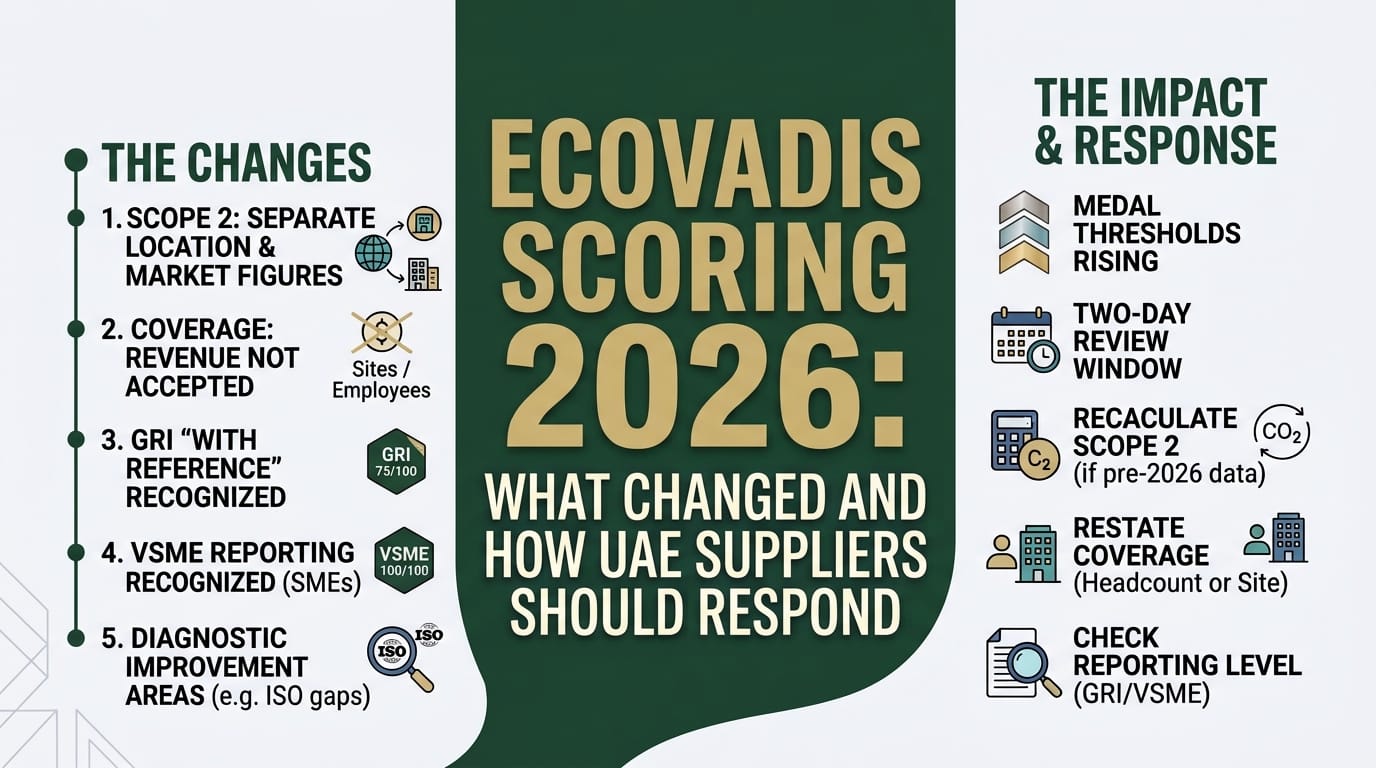
EcoVadis Scoring 2026: What Changed and How UAE Suppliers Should Respond By Danushka Prabhad, Senior...

How Amazon Sellers Can Earn the Carbon Impact Badge — And Why a Product Carbon...
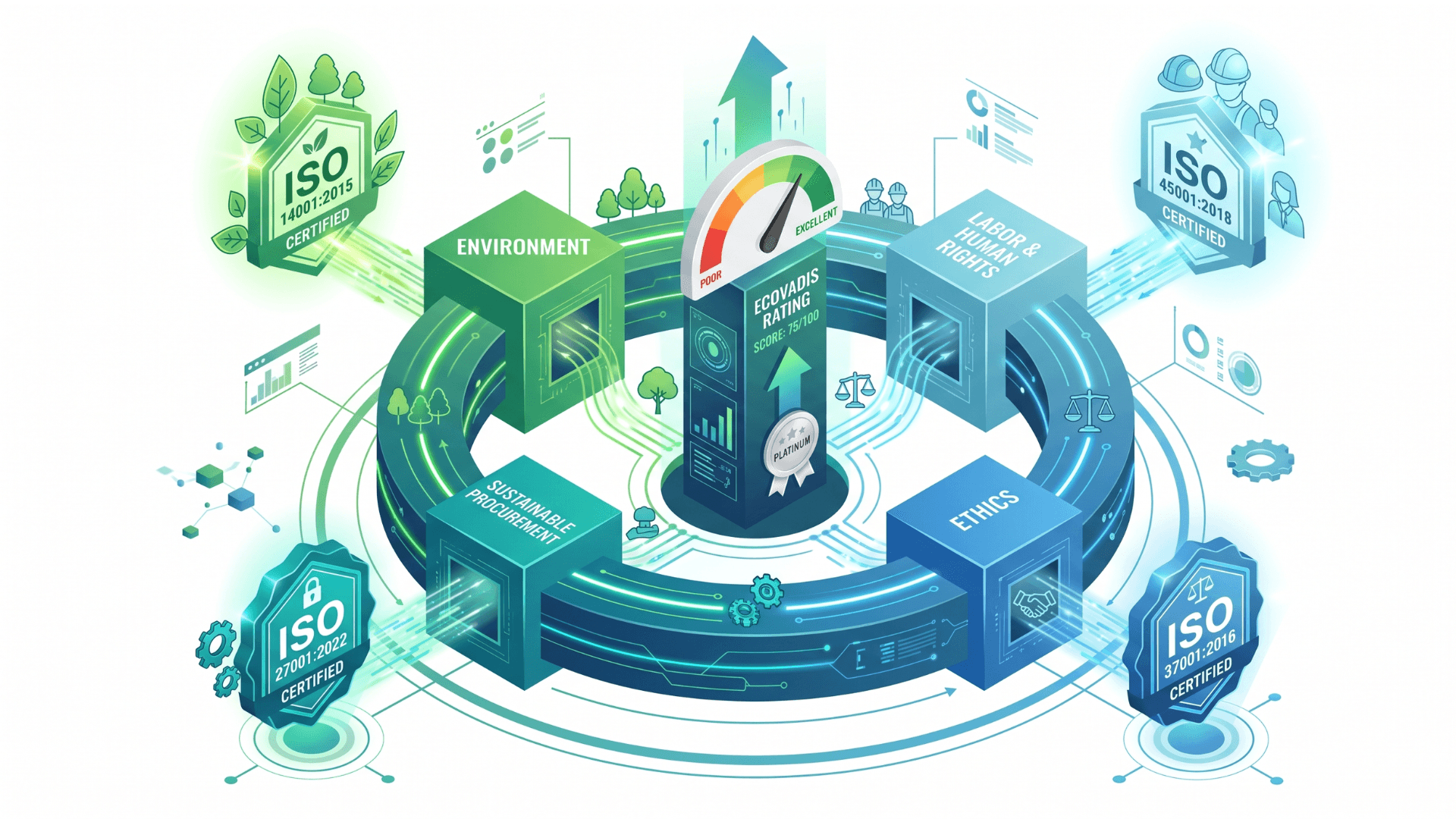
Why ISO Certificates Are the Fastest Way to Improve Your EcoVadis Score By Danushka Prabhad,...

UAE GHG Reporting: What Businesses Must Do Before the Deadline By Danushka Prabhad, Senior Sustainability...

GHG Reporting in Abu Dhabi: The Complete MRV Guide Under UAE Federal Law No. 11...

How EPDs, LCA, and FSC Certified Wood Help Achieve LEED and BREEAM Credits By Danushka...

How to Register Your Company on EcoVadis (Step-by-Step Guide) Learn how to register your company...

ISO 14019: What You Need to Know About the New Sustainability Verification Standard If you’ve...

How to Read an EPD: A Practical Guide for Construction Professionals Why EPDs Are Often...

Everything You Need to Know About EPDs: All Questions Answered Home Everything You Need to...

Case Study 2 Home How Planet First Helped a Market Intelligence Firm Improve Its EcoVadis...

EPD Program Operators: How to Choose, Credibility, and Global Overview If you’re a UAE business...
Boost Your Sustainbaility performance with Expert Help
Work with Planet First, trusted sustainability consultants in the Middle East, and ensure your sustainability performance is fully recognized.
info@theplanetfirst.org
Phone
+971 50 25 35 594

A sustainability consultancy supporting ESG reporting, carbon footprint calculations, and compliance for businesses.
Main Services
Industry & Regional Services
Contact
- 112, Normandy 2, Al Nadha 2, Dubai, UAE
- info@theplanetfirst.org
- +971 50 253 5594