
Sustainability Reporting in the UAE
Sustainability Reporting in the UAE

Sustainability reporting is the structured process through which organizations communicate their environmental, social, and governance (ESG) performance to stakeholders. It transforms operational data, policies, and initiatives into transparent disclosures that demonstrate accountability, strategic direction, and long-term value creation.
For businesses operating in the UAE, sustainability reporting has evolved from voluntary corporate responsibility practice to strategic necessity. Investors scrutinize ESG performance before capital allocation. Banks integrate sustainability criteria into lending decisions. Multinational buyers require supply chain transparency. Government entities increasingly reference sustainability credentials in procurement evaluations.
As the UAE advances its Net Zero by 2050 commitment and positions itself as a global sustainability leader, companies across sectors face growing expectations to measure, manage, and communicate their sustainability performance through credible reporting frameworks.
Get Free Consultation With Our Experts
The UAE Sustainability Reporting Landscape
The UAE’s sustainability reporting environment is shaped by national ambition, international alignment, and market-driven expectations rather than universal regulatory mandates.
- National sustainability vision
UAE’s Net Zero 2050 Strategic Initiative and National Climate Change Plan establish the context for corporate sustainability action. While these frameworks don’t mandate reporting for all companies, they signal clear directional expectations. - Financial sector integration
UAE banks and financial institutions progressively incorporate ESG considerations into risk assessment, lending criteria, and investment decisions. Companies seeking capital or maintaining banking relationships encounter sustainability disclosure requirements. - Supply chain transparency demands
UAE businesses serving international markets or multinational corporations face contractual requirements to report environmental impacts, labor practices, governance structures, and climate risks. - Government procurement criteria
Major projects and government tenders increasingly reference sustainability performance and reporting, particularly for infrastructure, construction, and service contracts. - Free zone and mainland companies
Sustainability reporting relevance extends across UAE business structures. Free zone entities serving international clients often face earlier reporting pressure, while mainland companies encounter growing local market expectations. - Sector-specific drivers
Energy, construction, manufacturing, logistics, and real estate sectors face heightened scrutiny given their environmental footprints and operational impacts.
Key Sustainability Reporting Standards and Frameworks
UAE companies typically adopt internationally recognized frameworks that provide methodological rigor and stakeholder credibility.
Global Reporting Initiative (GRI)
The most widely used sustainability reporting standard globally. GRI provides comprehensive guidance covering economic, environmental, and social topics. UAE companies across sectors adopt GRI for its materiality-driven approach and stakeholder focus.
International Sustainability Standards Board (ISSB)
Emerging as the baseline for investor-focused sustainability disclosure. ISSB Standards (IFRS S1 and S2) address sustainability-related financial information and climate-related disclosures, aligning with financial reporting conventions.
Sustainability Accounting Standards Board (SASB)
Industry-specific standards focusing on financially material sustainability information. Particularly relevant for UAE companies with investor reporting obligations or operating in sectors with defined SASB standards.
Task Force on Climate-related Financial Disclosures (TCFD)
Framework for climate risk and opportunity disclosure. Increasingly referenced by financial institutions and investors assessing climate-related financial impacts.
United Nations Sustainable Development Goals (SDGs)
Many UAE companies align reporting with relevant SDGs, demonstrating contribution to global sustainability objectives and UAE national priorities.
Framework selection considerations
Companies choose based on stakeholder expectations, reporting purpose (investor vs. multi-stakeholder), sector relevance, and strategic objectives. Many adopt hybrid approaches combining elements from multiple frameworks.
Get Free Consultation With Our Experts
Planet First's Sustainability Reporting Approach
Planet First delivers structured sustainability reporting support aligned with UAE business realities and international framework requirements.
Step 1
Scoping and objective alignment
We begin by understanding reporting purpose, target audience, timeline requirements, and strategic objectives. This establishes clear boundaries and ensures reports serve business goals beyond compliance.
Step 2
Materiality assessment
Working with management teams, we identify sustainability topics most relevant to business operations and stakeholder priorities. This materiality-driven approach ensures reports focus on issues that matter rather than generic disclosures.
Step 3
Data collection and validation
We design data collection protocols covering environmental metrics, social indicators, governance structures, and economic performance. This includes coordinating across departments, establishing data quality controls, and addressing information gaps.
Step 4
Stakeholder engagement
Where appropriate, we facilitate stakeholder consultation processes identifying expectations, concerns, and information needs that inform report content and strategic direction.
Step 5
Report development
We draft sustainability reports following selected framework requirements, translating technical data into clear narratives that communicate performance, challenges, and forward commitments. Reports balance transparency with strategic positioning.
Step 6
Internal validation and review
Before finalization, we coordinate internal review cycles ensuring factual accuracy, management alignment, and appropriate disclosure of both achievements and areas requiring improvement.
Step 7
Publication and communication support
We assist with report formatting, publication preparation, and stakeholder communication strategies ensuring reports reach intended audiences effectively.
Value Beyond Report Production
Planet First’s sustainability reporting service extends beyond document creation to deliver strategic business value.
Performance insights
The reporting process reveals operational inefficiencies, risk exposures, and improvement opportunities often invisible in standard business reporting.
Strategic alignment
We help companies connect sustainability performance with business strategy, demonstrating how ESG factors influence long-term competitiveness and resilience.
Stakeholder confidence
Credible reporting builds trust with investors, customers, employees, and regulators, strengthening relationships critical to business success.
Decision-useful information
Reports are structured to inform management decisions, investment planning, and strategic prioritization rather than serving purely as compliance documents.
Continuous improvement foundation
Initial reporting establishes baseline performance and measurement systems supporting year-over-year progress tracking and target setting.
Get Free Consultation With Our Experts
What Sets Planet First Apart
Our approach to sustainability reporting reflects practical implementation experience and client-centric service delivery.
- UAE market understanding – we navigate local business contexts, regulatory environments, and stakeholder expectations specific to companies operating across Emirates.
- Implementation focus – beyond report writing, we help companies build internal systems, data collection processes, and organizational capabilities supporting ongoing reporting cycles.
- Framework expertise – our team maintains current knowledge of evolving standards, ensuring reports reflect latest guidance and best practices.
- Transparency and realism – we emphasize honest disclosure over greenwashing, helping companies communicate challenges alongside achievements to build stakeholder credibility.
- Long-term partnership – we view sustainability reporting as ongoing engagement, supporting companies through multi-year reporting journeys as performance matures and expectations evolve.
Who Benefits from Sustainability Reporting Services
Planet First supports diverse UAE organizations developing sustainability reports:
- Small and medium enterprises seeking to formalize sustainability practices and communicate performance to growing stakeholder bases.
- Large corporations with established operations requiring comprehensive ESG disclosure for investors, lenders, or regulatory purposes.
- Holding groups and conglomerates coordinating sustainability reporting across multiple business units and sectors.
- Manufacturing and industrial companies managing significant environmental footprints and supply chain responsibilities.
- Service providers and professional firms demonstrating responsible business practices to clients and employees.
- Export-oriented businesses meeting international customer sustainability requirements and supply chain transparency demands.
- Companies preparing for ESG ratings needing structured disclosure supporting external assessments and rankings.
Partner with Planet First for Credible Sustainability Reporting
Sustainability reporting represents more than regulatory compliance or stakeholder relations—it’s a strategic tool for understanding business impacts, identifying risks and opportunities, and demonstrating responsible management.
Planet First brings technical expertise, practical implementation experience, and UAE market knowledge to sustainability reporting engagements. We help companies develop reports that satisfy stakeholder expectations while delivering genuine business value through performance insights and strategic alignment.
Whether beginning your first sustainability report or enhancing existing disclosure practices, Planet First provides structured support that transforms sustainability data into credible, decision-useful reporting.
Contact Planet First to discuss how sustainability reporting can strengthen your business positioning and stakeholder relationships in the UAE’s evolving ESG landscape.
Frequently Asked Questions
Framework selection depends on your primary stakeholders, reporting objectives, and industry sector. GRI (Global Reporting Initiative) suits companies with diverse stakeholder groups including customers, employees, communities, and NGOs—it’s comprehensive and widely recognized globally. ISSB Standards are ideal for investor-focused reporting, particularly if shareholders or lenders prioritize financially material sustainability information. SASB works well for sector-specific materiality and investor communication in industries with defined standards. TCFD applies when climate risk disclosure is primary focus, often required by financial institutions. Many UAE companies adopt hybrid approaches—for example, using GRI as the primary framework while incorporating TCFD climate disclosures or aligning with specific SDGs. Planet First helps assess stakeholder expectations and business objectives to recommend the most appropriate framework combination for your circumstances.
First-time sustainability report development typically requires 4-6 months from project initiation to publication for UAE companies. The timeline includes scoping and planning (2-3 weeks), materiality assessment (3-4 weeks), data collection across departments (6-10 weeks, often the longest phase), stakeholder engagement if conducted (3-4 weeks), report drafting (4-6 weeks), internal review cycles (2-3 weeks), and finalization and design (2-3 weeks). Timeline variations depend on organizational readiness, data availability, number of locations covered, stakeholder consultation scope, and internal approval processes. Companies with existing management systems like ISO 14001 or established ESG data collection often progress faster. Subsequent annual reports typically require 2-4 months as systems, processes, and baseline data already exist. Starting early is advisable—many companies target calendar year reporting and begin processes in Q1 to allow adequate time for comprehensive data gathering and validation.
Sustainability reports require quantitative and qualitative data across environmental, social, and governance dimensions. Environmental data includes energy consumption (electricity, fuel), greenhouse gas emissions (Scope 1, 2, and relevant Scope 3 categories), water usage, waste generation and disposal, material consumption, and pollution metrics. Social data covers employee demographics, health and safety incidents, training hours, diversity statistics, labor practices, community investment, and supply chain conditions. Governance data includes board composition, ethics policies, compliance records, risk management structures, and anti-corruption measures. Economic data encompasses financial performance, tax contributions, local procurement, and economic value distribution. Specific requirements vary by chosen framework and materiality assessment results. UAE companies often face challenges gathering Scope 3 emissions data from suppliers or consolidating information across multiple Emirates locations—Planet First helps design practical data collection systems accounting for these realities.
External assurance is not universally mandatory but increasingly expected for credibility, particularly when reports inform investor decisions or support ESG ratings. Third-party assurance provides independent validation of reported data accuracy, completeness, and alignment with stated frameworks. Limited assurance (less rigorous) or reasonable assurance (more comprehensive) options exist depending on stakeholder requirements and risk tolerance. Benefits include enhanced credibility with investors and lenders, improved internal data quality and controls, identification of reporting gaps or weaknesses, and competitive differentiation in markets valuing transparency. Many UAE companies pursue assurance for specific high-risk metrics like greenhouse gas emissions while self-verifying other indicators initially. As reporting matures, comprehensive assurance becomes more common. Companies should consider assurance requirements from specific stakeholders—some investors or banks explicitly require assured reports. Planet First can coordinate assurance processes with qualified providers if your reporting objectives warrant external validation.
Absolutely. While large corporations often face explicit reporting requirements, SMEs increasingly benefit from structured sustainability disclosure. Benefits for UAE SMEs include qualification for contracts with larger companies requiring supplier sustainability performance, improved access to capital as banks integrate ESG criteria into lending decisions, competitive differentiation in markets where sustainability influences purchasing decisions, enhanced employee attraction and retention, operational cost savings identified through environmental data analysis, and preparation for future regulatory requirements. SME sustainability reports can be proportionate to size and complexity—not all reports need to be 100-page documents. Focused reports addressing material topics relevant to your business and stakeholders provide value without excessive resource burden. Many UAE SMEs begin with simplified reporting frameworks or industry-specific approaches before advancing to comprehensive standards. Planet First tailors sustainability reporting support to organizational capacity and strategic priorities, ensuring practical, cost-effective approaches for companies at all maturity levels.
- All Posts
- blog
- Cases

How Amazon Sellers Can Earn the Carbon Impact Badge — And Why a Product Carbon...
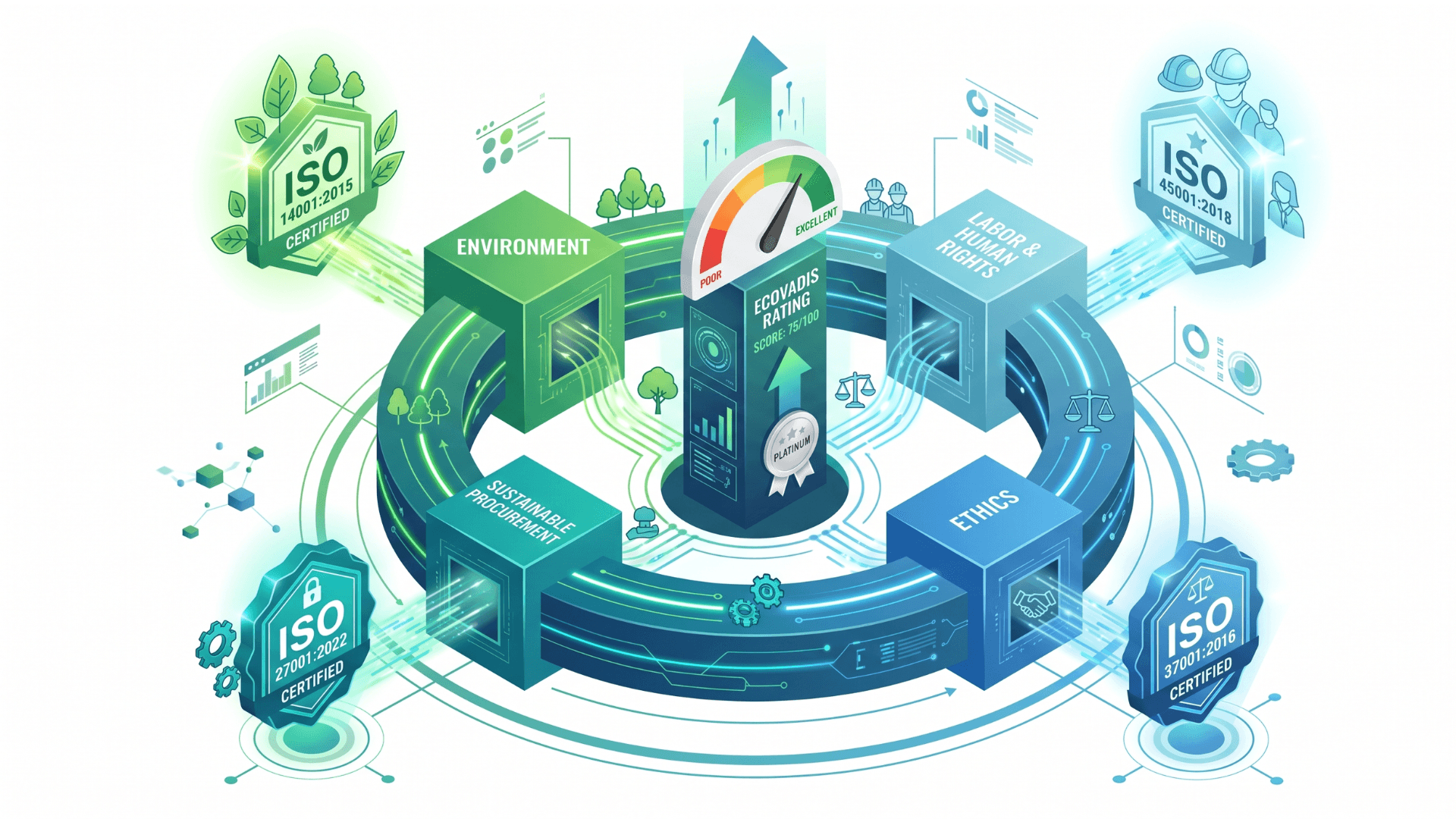
Why ISO Certificates Are the Fastest Way to Improve Your EcoVadis Score By Danushka Prabhad,...
UAE GHG Reporting: What Businesses Must Do Before the Deadline By Danushka Prabhad, Senior Sustainability...
GHG Reporting in Abu Dhabi: The Complete MRV Guide Under UAE Federal Law No. 11...

How EPDs, LCA, and FSC Certified Wood Help Achieve LEED and BREEAM Credits By Danushka...

How to Register Your Company on EcoVadis (Step-by-Step Guide) Learn how to register your company...
Boost Your Sustainbaility performance with Expert Help
Work with Planet First, trusted sustainability consultants in the Middle East, and ensure your sustainability performance is fully recognized.
info@theplanetfirst.org
Phone
+971 50 25 35 594

A sustainability consultancy supporting ESG reporting, carbon footprint calculations, and compliance for businesses.
Main Services
GCC/Middle East Specific
Contact
- 112, Normandy 2, Al Nadha 2, Dubai, UAE
- info@theplanetfirst.org
- +971 50 253 5594