blog

How to Publish EPDs
blog

How to Publish EPDs for Construction Products in the UAE: Step-by-Step Guide

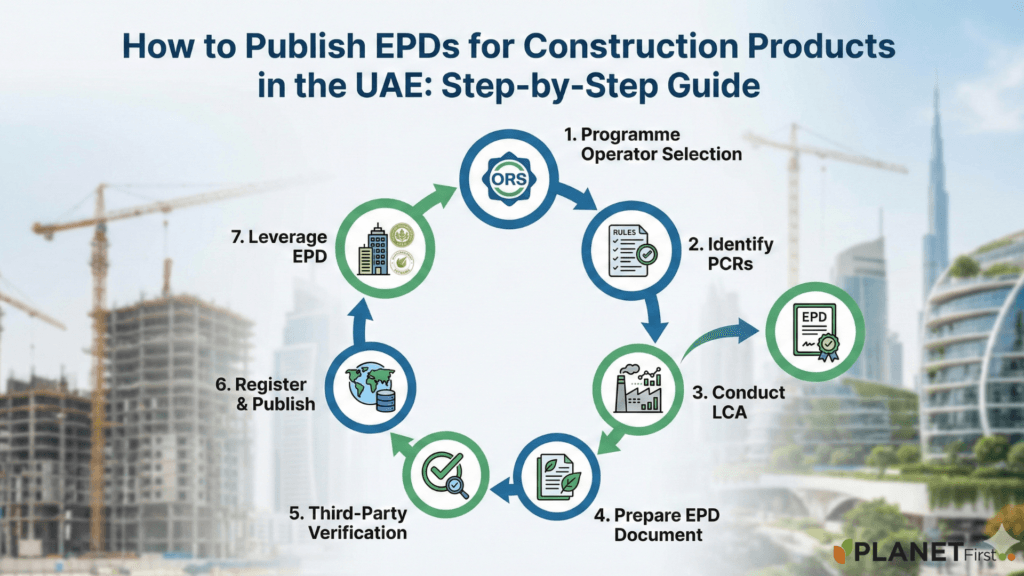
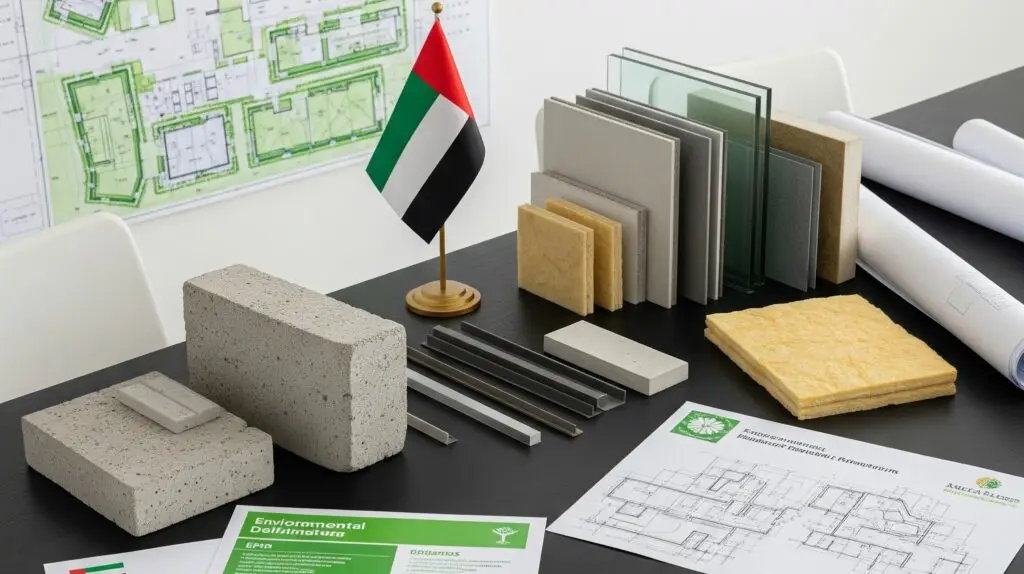
How to Publish EPDs for Construction Products in the UAE: Step-by-Step Guide Publishing an Environmental Product Declaration (EPD) for your construction products unlocks access to LEED-certified projects, Estidama-rated developments, and European export markets. But the path from manufacturing data to published EPD can feel overwhelming for UAE manufacturers encountering this process for the first time. This step-by-step guide walks you through exactly how to publish EPDs for construction products in the UAE, explaining what happens at each stage, what you’ll need to prepare, and how long the entire process typically takes. What Is an EPD and Why Does Publication Matter? An Environmental Product Declaration is a standardized, third-party verified document that communicates the environmental impact of your construction product throughout its lifecycle. Publication means your EPD is registered with an internationally recognized Programme Operator and accessible in global databases where architects, specifiers, and procurement professionals search for verified environmental data. Without proper publication, even a completed EPD has limited value. Publication makes your environmental transparency visible to the exact audiences who award contracts based on verified sustainability credentials. Step 1: Choose Your Programme Operator Your first critical decision is selecting which Programme Operator will manage your EPD. Programme Operators are organizations that maintain EPD programs, provide Product Category Rules (PCRs), and host EPD registries. Major Programme Operators for UAE construction products include: EPD International (Sweden) – Most widely recognized globally, extensive construction product PCRs IBU EPD (Germany) – Strong European recognition, detailed construction materials coverage UL Environment (USA) – Excellent for North American and Middle Eastern markets Environmental Footprint Institute (EFI) –  EFI is well suited for manufacturers seeking affordable international market acceptance Choose based on where you sell products and which databases your customers consult. LEED projects accept EPDs from any ISO 14025-compliant Programme Operator, but European markets often prefer EPD International or IBU. Programme Operators charge registration fees (typically AED 3,000-8,000) and require membership or participation agreements before EPD development begins. Step 2: Identify Applicable Product Category Rules Product Category Rules (PCRs) are the specific guidelines that define how to conduct Life Cycle Assessment and create EPDs for your product category. Construction products have detailed PCRs covering cement, concrete, insulation, steel, aluminum, glass, coatings, and dozens of other categories. Your chosen Programme Operator maintains a PCR library. You must identify which PCR applies to your specific product. If no exact PCR exists, you may need to follow a general construction product PCR or work with the Programme Operator to develop one. PCRs specify system boundaries (cradle-to-gate, cradle-to-grave), functional units, mandatory impact categories, and data quality requirements. Understanding your PCR before data collection prevents costly rework later. Step 3: Conduct Comprehensive Life Cycle Assessment Life Cycle Assessment (LCA) forms the technical foundation of every EPD. This stage involves collecting detailed manufacturing data and modeling environmental impacts using specialized software like SimaPro or GaBi. Data you’ll need to collect: Raw material inputs (types, quantities, sources) Energy consumption (electricity, natural gas, diesel by production stage) Water usage across manufacturing processes Transportation distances and modes for materials and finished products Waste generation (types, quantities, disposal methods) Product specifications (composition, weight, dimensions, lifespan) LCA software then models impacts across multiple environmental indicators including global warming potential (carbon footprint), ozone depletion, acidification, eutrophication, resource depletion, and more. The assessment typically covers cradle-to-gate (raw materials through factory gate) or cradle-to-grave (including product use and end-of-life). Professional LCA requires expertise in ISO 14044 methodology, environmental modeling, and database selection. Most UAE manufacturers engage experienced consultants for this technical phase rather than attempting it internally. Step 4: Prepare the EPD Document Once LCA modeling is complete, results are formatted into a standardized EPD document following ISO 14025 requirements and your Programme Operator’s template. The EPD includes product identification, manufacturer details, PCR reference, system boundary description, LCA results across all impact categories, and additional environmental information. Well-prepared EPDs present technical data clearly while remaining accessible to non-specialists. The document must be comprehensive enough for verification while serving as a practical marketing tool for sales teams and specification professionals. This document preparation typically takes 2-3 weeks after LCA completion, assuming data quality is good and no major issues arise. Step 5: Submit for Third-Party Verification EPDs cannot be self-declared—they require independent third-party verification by accredited experts. Your Programme Operator maintains lists of approved verifiers with relevant expertise in construction products and LCA methodology. The verifier reviews your LCA calculations, data quality, methodology compliance, and EPD document accuracy. They identify errors, request clarifications, and may require revisions before approval. This quality control ensures EPD credibility and prevents greenwashing. Verification timeline: 6-10 weeks depending on verifier availability, document complexity, and how quickly you respond to questions. Budget for potential revision cycles if this is your first EPD. Verification fees typically range from AED 8,000-15,000 depending on product complexity and verifier rates. Step 6: Register and Publish Your EPD After successful verification, you receive a verification statement confirming your EPD meets all requirements. You then formally register the EPD with your Programme Operator, pay registration fees, and receive a unique EPD registration number. The Programme Operator publishes your EPD in their online database, making it searchable by product name, manufacturer, category, and registration number. Many EPDs are also indexed in aggregator databases that architects and specifiers use during product selection. Published EPDs receive a validity period, typically 5 years, after which they require renewal with updated data and re-verification. Step 7: Leverage Your Published EPD Once published, maximize your EPD’s business value by sharing it with customers, specifying it in tender submissions, featuring it prominently on product pages and technical datasheets, training sales teams on EPD benefits, and monitoring which projects require EPD documentation. Published EPDs directly contribute to LEED credits, satisfy Estidama requirements, meet European procurement policies, and differentiate your products in sustainability-focused tenders. Realistic Timeline for EPD Publication From project start to publication, expect 4-6 months for a standard construction product EPD: Weeks 1-2: Programme Operator selection, PCR identification, project scoping Weeks 3-8: Data collection and Life Cycle Assessment

ecovadis assessment
blog

Documents Required for EcoVadis Assessment in the UAE: Essential Checklist for Dubai Companies

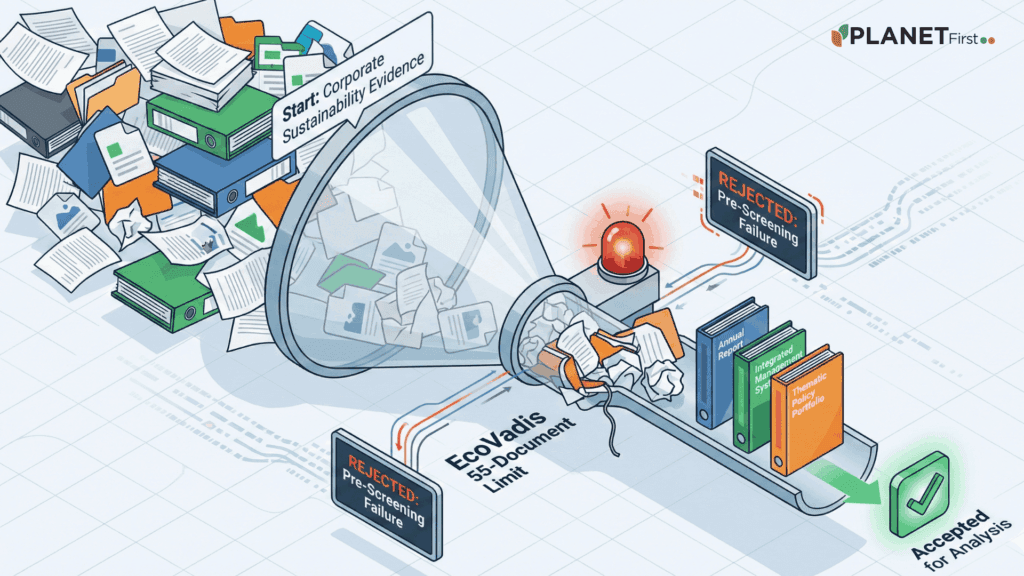
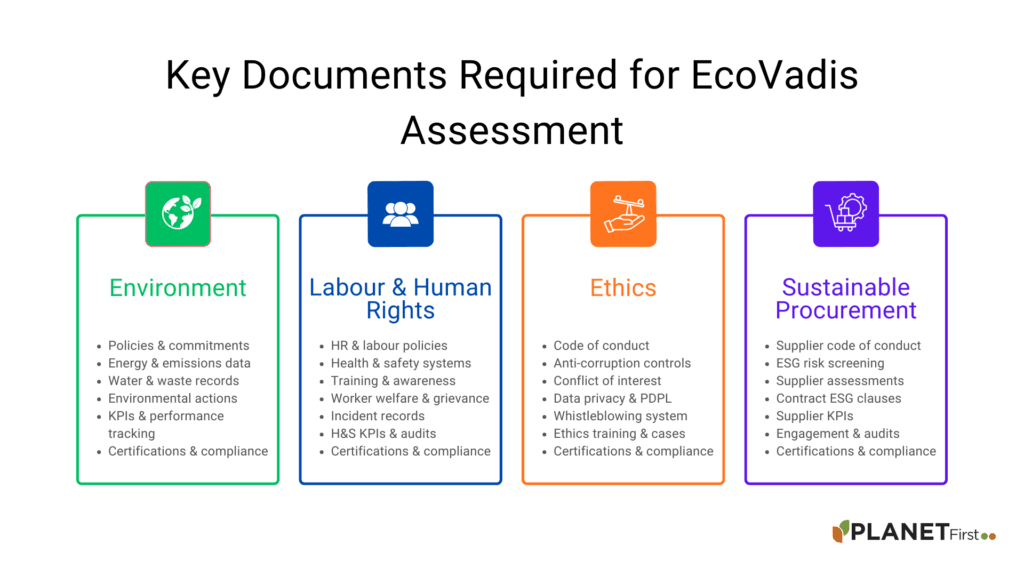
Documents Required for EcoVadis Assessment in the UAE: Essential Checklist for Dubai Companies If your company in Dubai or the UAE has been asked to complete an EcoVadis assessment, your first question is probably: what documents do I actually need? Unlike traditional certifications, EcoVadis evaluates your entire sustainability management system through documented evidence across four themes: Environment, Labor and Human Rights, Ethics, and Sustainable Procurement.The challenge for most UAE companies isn’t lacking good practices—it’s not having the right documentation to prove them. This practical guide shows you exactly what documents are required for EcoVadis assessment in the UAE. How EcoVadis Evaluates Your Documents Before gathering documents, understand what EcoVadis is actually looking for. Many Dubai companies submit generic policies and wonder why their scores stay low. EcoVadis evaluates three types of evidence: Policies Define your commitments. They must be formal, signed by senior management, dated within the past three years, and include specific commitments or measurable targets. Actions demonstrate implementation. This includes training records, audit reports, procedures, risk assessments, and project documentation showing your policies are actively used. Results show measurable outcomes. Energy consumption data, waste figures, training completion rates, supplier audit results, or safety incident reports with trends over time. The Most Common UAE Company Mistake Submitting only policies without supporting evidence or results. Having an environmental policy is good—but EcoVadis also wants your energy data, proof employees were trained, and evidence you’re tracking progress. Another frequent issue: generic templates without company branding, signatures, or dates. EcoVadis analysts spot these immediately. Essential Documents by EcoVadis Theme Environment Documents Core policies needed: Environmental policy (CEO-signed, dated, with specific commitments) Energy management policy or carbon reduction commitment Waste management policy Implementation evidence: ISO 14001 certificate (if applicable) Environmental training records with dates and participants Energy consumption data (kWh) for recent 12-24 months Water usage tracking Waste generation data by type and disposal method Environmental audit or inspection records UAE-specific tip: Many Dubai companies use district cooling or operate in free zones. Document compliance with these systems—it demonstrates environmental responsibility even when you don’t control utilities directly. Labor and Human Rights Documents Core policies needed: Labor and Human Rights policy referencing ILO conventions Health and Safety policy Non-discrimination and diversity policy Working hours and fair compensation policy Implementation evidence: Health and Safety training records with completion rates Safety incident reports showing corrective actions Evidence of safety committees or worker representatives Worker accommodation inspection records (if providing housing) Grievance mechanism documentation Compliance records with UAE Federal Decree-Law No. 33 of 2021 Emergency drill records UAE-specific tip: For companies employing laborers or providing accommodation, inspection documentation is essential. EcoVadis understands regional workforce dynamics but expects documented fair treatment across all employee categories. Ethics Documents Core policies needed: Code of Conduct or Business Ethics policy Anti-corruption and anti-bribery policy Conflict of interest policy Data privacy policy (aligned with UAE Personal Data Protection Law) Whistleblower protection policy Implementation evidence: Ethics training completion records Gift and hospitality register Third-party due diligence procedures Data protection procedures or impact assessments Confidential reporting channel documentation Records of how ethics concerns were handled UAE-specific tip: With UAE’s Personal Data Protection Law in effect, companies handling personal data need documented privacy procedures. Reference both local law and international standards where relevant to your business. Sustainable Procurement Documents Core policies needed: Supplier Code of Conduct covering environmental, social, and ethical standards Sustainable procurement policy Supplier risk assessment methodology Implementation evidence: Supplier sustainability questionnaires or assessment results Supplier audit reports with corrective action follow-up Evidence of supplier capacity building or training Documentation showing sustainability criteria in supplier selection High-risk supplier identification records Supplier performance tracking including sustainability metrics UAE-specific tip: GCC supply chains often include suppliers from South Asia and East Asia. Your approach should recognize different risk levels. Document any supplier engagement you’ve actually done—even informal check-ins count if properly recorded. Case Study: Dubai Trading Company Transformation A mid-sized Dubai distribution company first attempted EcoVadis in 2023 and scored in the low 30s—well below Bronze threshold. Their policies looked comprehensive but were entirely generic templates without customization. More critically, they submitted only policies. No training records, no performance data, no implementation evidence. The reality: they had good practices. Regular safety training happened. Energy use was tracked. Suppliers were evaluated on basic criteria. None of it was documented properly.   What Planet First Consultants changed: Policies were rewritten to reflect actual operations, signed by the Managing Director, properly branded and dated. Implementation evidence was gathered from existing systems: HR had training records, facilities had energy bills, procurement had supplier evaluations. Simple reporting was formalized with KPI tracking showing monthly trends for training completion, energy use, waste diversion, and supplier assessments. Result: Their 2024 reassessment scored mid-50s, achieving Bronze. The improvement came from documenting existing practices properly and adding targeted performance reporting. Documents EcoVadis Typically Rejects Start document collection early. Don’t wait for your questionnaire to arrive. Begin gathering policies, training records, and data now. Involve multiple departments. HR handles training and labor. Operations manages environmental data. Procurement knows suppliers. Legal oversees ethics. Cross-functional collaboration is essential. Document in English or translate key policies. EcoVadis analysts commonly work in English. If operational documents are in Arabic, consider translations for core policies. Be authentic about current capabilities. Don’t claim practices you haven’t implemented. EcoVadis conducts external verification and may request additional proof. Build your submission on real current practices. Think quality over quantity. EcoVadis allows up to 55 documents per assessment, but focus on relevance. Each document should clearly address specific questionnaire topics. A comprehensive sustainability report covering multiple themes is more valuable than 20 disconnected files. When to Consider Professional Support Many UAE companies successfully complete their first EcoVadis assessment independently. Professional support from Planet First Consultants makes sense when: You received a lower score than expected and feedback isn’t clear on improvements You’re targeting a specific medal level required by major customers Your team is strong on operations but new to sustainability documentation You’re facing tight customer deadlines and starting from scratch You

blog

How EcoVadis Scoring Works in 2026: Full Framework Explained

How EcoVadis Scoring Works in 2025: Full Framework Explained EcoVadis scoring determines how buyers view your sustainability commitment. Understanding the 2026 framework helps you prepare better evidence, avoid common mistakes, and achieve medal status faster. This guide explains everything you need to know. What is EcoVadis and Why Scoring Matters EcoVadis evaluates sustainability management systems across four themes—Environment, Labor & Human Rights, Ethics, and Sustainable Procurement—using 21 sustainability criteria. Over 150,000 companies globally use EcoVadis ratings to assess suppliers and demonstrate ESG compliance. Your EcoVadis score (0-100) directly impacts business opportunities. Many multinational buyers require minimum scores—typically 45 or higher—to qualify as approved suppliers. For scorecards published after January 1, 2025, medal eligibility is based on percentile rankings against all companies rated globally in the past 12 months. Low scores can disqualify you from RFPs, while Gold or Platinum medals open doors to premium contracts. The Four Themes and Their Weightings (2025) EcoVadis weighs its four themes based on their relevance to your specific industry. Each theme contributes differently to your overall score depending on your sector’s risk profile. Theme Weight Range Key Focus Areas Environment Low to High Energy, emissions, water, waste, biodiversity Labor & Human Rights Moderate to High Working conditions, health & safety, diversity, child labor Ethics Moderate to High Corruption, anti-competitive practices, data privacy Sustainable Procurement Low to Moderate Supplier code of conduct, supplier audits, traceability Environment Environmental scoring examines your policies on climate change, resource management, pollution prevention, and biodiversity protection. Manufacturing and logistics companies typically receive higher weightings here. Certifications like ISO 14001 provide strong evidence, especially when many sites are certified. Labor and Human Rights This theme assesses working conditions, occupational health and safety, employee relations, and human rights due diligence. Companies with large workforces or operations in high-risk countries face stricter scrutiny. Evidence requirements include training records, grievance mechanisms, and diversity KPIs. Ethics Ethics evaluation covers anti-corruption measures, responsible information management, and fair business practices. The 360° Watch tool monitors over 100,000 data sources including NGOs, press, and trade unions for public information about sustainability practices. A single severe ethics violation can eliminate medal eligibility. Sustainable Procurement The newest theme focuses on how you manage suppliers’ sustainability performance. Most companies score lowest here. Key evidence includes supplier sustainability assessments, code of conduct adoption rates, and buyer training on responsible sourcing. How the Scoring Methodology Works EcoVadis measures sustainability management systems through three pillars: Policies, Actions, and Results, separated into seven management indicators. Evidence Requirements and Validation Supporting documents are mandatory—company declarations are credited only if evidence is provided. Documents must be: Official with company name, logo, and date Recent: Policies and actions valid for 8 years; KPI data from last 2 years Relevant to activated criteria for your industry Properly scoped to assessed entities Subthemes, Weight Multipliers, Indicators Seven criteria assess each pillar: Policies, Endorsements, Measures, Certifications, Coverage, Reporting, and 360° Watch. Actions (Measures, Certifications, Coverage) carry approximately 40% weight—the highest. Results (Reporting, 360° Watch) account for 35%. Policies represent 25%. Each company receives a customized questionnaire based on industry (ISIC code), size, and location. Only activated criteria impact your score. A chemical manufacturer faces different environmental questions than a software company. How Points Accumulate Theme scores aggregate across all seven indicators. Starting January 2025, scorecards display unrounded theme values (e.g., 68.3/100) which are used to calculate the overall score, potentially causing slight rating changes. Your overall score is a weighted average of theme scores. The 360° Watch indicator is set at 75/100 by default but can reduce theme scores across three ranges based on negative findings or increase scores with positive news. Common Reasons for Low Scores Documentation Gaps: Documents lacking credibility, not official, undated, or missing company name/logo are frequently rejected. Generic templates downloaded from internet sources fail validation. Missing KPIs: Companies provide policies but no performance data. KPI/Results data must be from the last 2 years. Outdated metrics earn zero points. Weak Policies: Policies that are vague, don’t assign responsibility, or lack measurable commitments score poorly. Policies must connect to concrete actions. Sector Risks Not Addressed: Companies ignore high-risk issues specific to their industry. A garment manufacturer without forced labor policies faces significant deductions. Poor Coverage: Actions implemented at only one site when you operate ten locations demonstrate inadequate deployment. Two Short Realistic Case Scenarios Scenario 1: SME Improving from Bronze to Silver A 200-employee Dubai trading company scored 52 (Bronze) in their first assessment. They addressed corrective actions by implementing supplier sustainability assessments (20% coverage), creating an anti-corruption policy with whistleblower hotline, and reporting waste reduction KPIs. Their next assessment yielded 67 (Silver)—a 15-point improvement. The buyer renewed their contract with volume increases. Scenario 2: Company with Rejected Submission and Corrective Actions A manufacturing firm submitted their questionnaire but received 38 points. They had negative 360° Watch findings related to environmental violations that reduced their theme score. They implemented a Corrective Action Plan (CAP), obtained ISO 14001 certification, submitted evidence of regulatory compliance, and improved wastewater treatment. Their re-assessment six months later scored 61. Evidence Folder: What You Must Prepare Essential Documents Checklist: Sustainability/ESG policy (board-approved, dated within 8 years) Code of Conduct and Supplier Code of Conduct Anti-corruption and anti-bribery policy Health & safety policy with procedures Environmental policy covering energy, emissions, waste Diversity and equal opportunity policy ISO certifications (14001, 45001, 27001) if available Training records with attendance sheets and completion rates KPI reports: emissions, energy consumption, waste diverted, accident rates, training hours, supplier assessments Third-party verification of KPIs to reach 100/100 for reporting indicators Grievance mechanism documentation Supplier assessment results and audit reports Organize documents by theme in clearly labeled folders. Use file names like “ENV_ISO14001_Certificate_2024.pdf” for easy reference. Quick Wins to Improve EcoVadis Score in 60-90 Days Update Outdated Policies: Refresh policies older than 2 years with current dates and board signatures Create Missing Foundational Policies: Prioritize anti-corruption, supplier code of conduct, and environmental policy if absent Document Existing Actions: Many companies implement good practices but never document them—create one-page procedure documents Collect

blog

How EPDs Are Revolutionizing Green Construction and Procurement in the UAE

How EPDs Are Revolutionizing Green Construction and Procurement in the UAE As the UAE races toward its Net Zero 2050 vision, one powerful tool is quietly transforming how we build: Environmental Product Declarations. Here’s why every construction professional needs to understand EPDs—and how they’re reshaping sustainable building across the Emirates. Picture this: you’re selecting concrete for a major Dubai development, and you need to choose between three suppliers. Traditional procurement focuses on cost and quality. But what if you could also see exactly how much carbon each option generates, how much water it consumes, and its complete environmental footprint? That’s the power of Environmental Product Declarations UAE—and they’re becoming essential for every construction project in the region. What Are Environmental Product Declarations (EPDs)? Think of an EPD as a “nutrition label” for building materials. An Environmental Product Declaration is a verified, science-based document that reveals the complete environmental story of a product—from raw material extraction through manufacturing, use, and end-of-life disposal.Unlike marketing claims or general sustainability statements, EPDs in green construction provide: For UAE construction professionals, this means making material decisions based on real data rather than guesswork. Why EPDs Matter More Than Ever in the UAE The Emirates is at a sustainability inflection point. With Federal Decree-Law No. 11 of 2024 mandating emissions reporting and the UAE’s commitment to Net Zero by 2050, the construction industry faces unprecedented pressure to demonstrate environmental performance.EPDs provide the transparency and accountability that new regulations demand. They’re not just nice-to-have documentation—they’re becoming essential compliance tools for meeting UAE’s evolving green building requirements. How EPDs Transform Green Construction in the UAE Making Smarter Material Choices Sustainable building materials UAE selection becomes strategic when you have real data. Instead of choosing materials based solely on cost or availability, architects and engineers can now: This data-driven approach is revolutionizing how major developments approach material procurement. Unlocking Green Building Certifications LEED certification UAE and Estidama EPDs requirements are becoming more stringent. Major rating systems now award significant credits for EPD usage: For projects targeting high certification levels, EPDs aren’t optional—they’re essential for achieving point thresholds. Meeting Local Regulatory Requirements UAE authorities are increasingly incorporating EPD requirements into building codes: Early adoption positions companies ahead of regulatory curves. Driving Market Innovation The demand for Environmental Product Declarations UAE is pushing manufacturers toward cleaner production methods. When environmental impacts become visible and comparable, suppliers invest in: This creates a positive feedback loop benefiting the entire construction ecosystem. Transforming Green Procurement UAE Practices Strategic Sustainable Purchasing Green procurement UAE is evolving from checkbox exercises to strategic advantage. EPDs enable procurement teams to: Enhanced Lifecycle Value Analysis EPDs reveal the complete cost picture. While low-carbon materials might have higher upfront costs, their lifecycle benefits often include: Smart procurement considers these long-term value propositions. Real-World Impact: The Shamal Admin Building Success Story The Shamal Admin Building at Khalifa Port, Abu Dhabi demonstrates EPDs’ practical power. By prioritizing materials with robust Environmental Product Declarations, the project team achieved: The project’s success wasn’t accidental—it resulted from systematic EPD integration throughout the design and procurement process. This approach is becoming the standard for ambitious UAE developments. Practical Steps for UAE Construction Professionals For Architects and Engineers For Developers and Contractors For Procurement Teams Getting Started: Your EPD Implementation Roadmap Phase 1: Education and Planning Phase 2: Supplier Engagement Phase 3: Integration and Optimization Transform Your Construction Projects with EPD Expertise The UAE’s construction industry is evolving rapidly, and Environmental Product Declarations are becoming indispensable tools for success. Whether you’re targeting LEED certification UAE, meeting Estidama EPDs requirements, or simply positioning your organization as a sustainability leader, professional guidance makes all the difference.Don’t navigate the EPD landscape alone. Our sustainability consultancy specializes in helping UAE construction professionals leverage Environmental Product Declarations for maximum impact. We provide:✓ EPD strategy development tailored to your project goals✓ Green certification support for LEED, Estidama, and BREEAM✓ Sustainable procurement consulting to optimize environmental performance✓ Supplier engagement programs to expand EPD availability✓ Training and capacity building for your teamsReady to lead in sustainable construction? Contact our EPD specialists today for a complimentary consultation. Let’s discuss how Environmental Product Declarations can enhance your projects, meet regulatory requirements, and contribute to the UAE’s Net Zero future.Schedule your EPD strategy session now and discover how the right expertise can transform compliance challenges into competitive advantages. All Posts blog Cases Case Study: How Planet First Helped a Market Intelligence Firm to Improve Its… Case Study 2 Home How Planet First Helped a Market Intelligence Firm Improve Its EcoVadis… Read More EPD Program Operators Guide 2026 EPD Program Operators: How to Choose, Credibility, and Global Overview If you’re a UAE business… Read More EcoVadis Assessment Document Limit Guide Why Companies Fail EcoVadis Before Scoring Even Starts: The 55-Document Trap You’ve gathered everything—environmental policies,… Read More How to Publish EPDs for Construction Products in the UAE: Step-by-Step Guide How to Publish EPDs for Construction Products in the UAE: Step-by-Step Guide Publishing an Environmental… Read More Documents Required for EcoVadis Assessment in the UAE: Essential Checklist for Dubai Companies Documents Required for EcoVadis Assessment in the UAE: Essential Checklist for Dubai Companies If your… Read More How EcoVadis Scoring Works in 2026: Full Framework Explained How EcoVadis Scoring Works in 2025: Full Framework Explained EcoVadis scoring determines how buyers view… Read More Case Study: How Q Product Transformed Their EcoVadis Score and Secured Major International… Case Study: How Q Product Transformed Their EcoVadis Score and Secured Major International Partnerships Client:… Read More How EPDs Are Revolutionizing Green Construction and Procurement in the UAE How EPDs Are Revolutionizing Green Construction and Procurement in the UAE As the UAE races… Read More UAE Federal Decree-Law No. 11 of 2024: Your Complete Business Guide to Climate… UAE Federal Decree-Law No. 11 of 2024: Your Complete Business Guide to Climate Compliance As… Read More Why Dubai SMEs Are Turning to Sustainability Freelancers: Your Complete Guide to Affordable… Why Dubai SMEs Are Turning to Sustainability Freelancers: Your Complete Guide to Affordable Green Business… Read More EcoVadis for UAE SMEs: Why Your Next Big Contract Depends on Getting This… EcoVadis for UAE SMEs: Why Your Next Big Contract Depends on Getting This Right Picture… Read More EcoVadis Assessment in the UAE: A Sustainability Consultant’s

blog

UAE Federal Decree-Law No. 11 of 2024: Your Complete Business Guide to Climate Compliance

UAE Federal Decree-Law No. 11 of 2024: Your Complete Business Guide to Climate Compliance As climate regulations tighten globally, the UAE has positioned itself as a regional leader with groundbreaking legislation that will reshape how businesses operate. Here’s what every company needs to know about staying compliant—and competitive. The clock is ticking. With Federal Decree-Law No. 11 of 2024 taking effect on May 30, 2025, UAE businesses have less than a year to prepare for the country’s most comprehensive UAE climate law to date. This isn’t just another regulatory hurdle—it’s a fundamental shift that will determine which companies thrive in the emerging green economy and which get left behind. Why UAE Federal Decree-Law No. 11 Changes Everything The UAE has made its climate intentions crystal clear. This Federal Decree-Law No. 11 represents the nation’s first comprehensive climate legislation, directly supporting the ambitious Net Zero UAE strategy by 2050. For businesses, this means the era of voluntary climate action is over—mandatory carbon compliance UAE is here.What makes this law particularly significant is its scope. Unlike piecemeal regulations, this legislation creates a unified framework covering emissions monitoring, climate risk assessment, and carbon market participation. It’s designed to transform the UAE into a regional hub for climate innovation while ensuring businesses contribute meaningfully to national decarbonization goals. What Your Business Must Do: Key Requirements Explained Mandatory Greenhouse Gas Reporting Every business operating in the UAE—including those in free zones—must now implement comprehensive greenhouse gas reporting. Here’s what this means practically: The good news? This creates a level playing field where all businesses operate under the same transparency standards. Climate Risk Assessment UAE Requirements Climate risk assessment UAE obligations go beyond simple compliance—they’re about building business resilience. Companies must: This requirement recognizes that climate change isn’t a future problem—it’s affecting business operations today. Emission Reduction Targets and Action Plans The UAE will establish annual emission reduction targets across all sectors. Your business must: These aren’t suggestions—they’re mandatory actions with measurable outcomes. Carbon Market Participation Opportunities The law establishes voluntary carbon trading markets, creating new opportunities for forward-thinking businesses to: Your 7-Step Action Plan for Climate Compliance Step 1: Conduct Comprehensive Emissions Assessment Start with a thorough carbon reporting UAE baseline. Identify all emission sources using internationally recognized standards like ISO 14064. This foundation determines everything else. Step 2: Develop Science-Based Reduction Strategies Set clear, measurable targets aligned with Net Zero UAE objectives. Focus on: Step 3: Integrate Climate Governance Embed climate considerations into core business strategy: Step 4: Build Robust Reporting Infrastructure Implement systems that ensure accurate, timely greenhouse gas reporting: Step 5: Create Climate Adaptation Plans Develop comprehensive strategies for climate resilience: Step 6: Explore Carbon Market Opportunities Position your business to benefit from emerging carbon compliance UAE markets: Step 7: Build Internal Capability Create organizational capacity for ongoing success: The Business Case for Proactive Action Smart businesses recognize that UAE climate law compliance offers significant competitive advantages:Cost Savings: Energy efficiency and waste reduction directly impact profitability. Companies implementing comprehensive sustainability strategies typically see 15-25% reductions in operational costs.Access to Capital: Green financing options are expanding rapidly. ESG-focused investors increasingly favor companies with strong climate credentials.Brand Differentiation: Sustainability leadership attracts top talent, loyal customers, and premium partnerships. In today’s market, climate action is brand value.Risk Mitigation: Proactive climate risk assessment UAE strategies protect against operational disruptions, regulatory penalties, and reputation damage.Market Position: Early movers in carbon compliance UAE will shape industry standards and capture first-mover advantages in emerging green markets. Common Compliance Challenges (and How to Overcome Them) Many businesses worry about the complexity of Federal Decree-Law No. 11 requirements. Common concerns include: Why Professional Support Makes the Difference Navigating environmental regulations UAE requires specialized expertise. The most successful companies work with experienced sustainability consultants who understand both international best practices and local regulatory requirements.Professional sustainability consultancy UAE services provide: Ready to Lead in the New Climate Economy? Federal Decree-Law No. 11 of 2024 isn’t just about compliance—it’s about positioning your business for success in a carbon-constrained world. The companies that act decisively now will become the sustainability leaders of tomorrow.Don’t wait until the May 30, 2025 deadline to start planning. The most successful implementation strategies begin with comprehensive assessment and strategic planning.Contact our sustainability consultancy team today to discuss how we can help your business turn UAE climate law compliance into competitive advantage. Our experts specialize in greenhouse gas reporting, climate risk assessment UAE, and carbon compliance UAE strategies tailored to your industry and business needs.Schedule your complimentary climate readiness consultation and discover how proactive action can transform regulatory requirements into business opportunities. Your journey toward climate leadership starts with a single conversation.Ready to navigate UAE’s new climate regulations with confidence? Our sustainability experts are here to help. Contact us today to begin your compliance journey and unlock the competitive advantages of climate leadership. All Posts blog Cases Case Study: How Planet First Helped a Market Intelligence Firm to Improve Its… Case Study 2 Home How Planet First Helped a Market Intelligence Firm Improve Its EcoVadis… Read More EPD Program Operators Guide 2026 EPD Program Operators: How to Choose, Credibility, and Global Overview If you’re a UAE business… Read More EcoVadis Assessment Document Limit Guide Why Companies Fail EcoVadis Before Scoring Even Starts: The 55-Document Trap You’ve gathered everything—environmental policies,… Read More How to Publish EPDs for Construction Products in the UAE: Step-by-Step Guide How to Publish EPDs for Construction Products in the UAE: Step-by-Step Guide Publishing an Environmental… Read More Documents Required for EcoVadis Assessment in the UAE: Essential Checklist for Dubai Companies Documents Required for EcoVadis Assessment in the UAE: Essential Checklist for Dubai Companies If your… Read More How EcoVadis Scoring Works in 2026: Full Framework Explained How EcoVadis Scoring Works in 2025: Full Framework Explained EcoVadis scoring determines how buyers view… Read More Case Study: How Q Product Transformed Their EcoVadis Score and Secured Major International… Case Study: How Q Product Transformed Their EcoVadis Score and Secured Major International Partnerships Client:… Read More How EPDs Are Revolutionizing Green Construction and Procurement in the UAE How EPDs Are Revolutionizing Green Construction and Procurement in the UAE As the UAE races… Read More UAE Federal Decree-Law No. 11 of 2024: Your Complete Business Guide to Climate… UAE Federal Decree-Law

blog

Why Dubai SMEs Are Turning to Sustainability Freelancers: Your Complete Guide to Affordable Green Business Solutions in 2026

Why Dubai SMEs Are Turning to Sustainability Freelancers: Your Complete Guide to Affordable Green Business Solutions in 2026 Running a small or medium-sized enterprise (SME) in Dubai comes with unique challenges—and sustainability is quickly becoming one of them. If you’re a business owner wondering how to meet the UAE’s ambitious environmental goals without draining your budget, you’re not alone. The solution many smart SMEs are choosing? Partnering with sustainability freelancers who understand the local market inside and out. The Sustainability Reality Check for Dubai SMEs Let’s be honest: sustainability isn’t just about feeling good anymore. It’s about staying competitive. The UAE government has made it crystal clear that the country is serious about its Net Zero 2050 commitment, and businesses that don’t adapt risk being left behind.Here’s what’s driving this shift: The numbers speak for themselves: SMEs represent over 94% of UAE businesses and contribute nearly 70% of non-oil GDP. When this sector embraces sustainability, the impact is massive. Why Traditional Consulting Doesn’t Work for Most SMEs Big consulting firms often pitch sustainability solutions that sound impressive but fall short for smaller businesses. Here’s the reality: This is where sustainability freelancers change the game entirely. The Smart Alternative: Dubai’s Growing Pool of Sustainability Freelancers What Makes Freelancers Different? Cost-Effective Solutions That Actually Work Instead of paying for overhead and corporate bureaucracy, you invest directly in expertise. Most sustainability freelancers in Dubai charge 40-60% less than traditional consulting firms while delivering personalized attention you simply can’t get elsewhere.Local Market Knowledge Dubai-based sustainability freelancers understand the unique challenges of operating in the UAE: Proven Expertise Across Key Areas The best sustainability freelancers in Dubai specialize in: Real Results SMEs Are Seeing Case Study Insights (based on freelancer project outcomes): How to Choose the Right Sustainability Freelancer in Dubai Essential Qualifications to Look For: Red Flags to Avoid: Maximizing Your Investment: Getting the Most from Freelancer Partnerships Start with a Comprehensive Assessment The best freelancers begin with a thorough evaluation of your current operations: Focus on Quick Wins First Smart sustainability strategies prioritize initiatives that deliver immediate ROI: Build Long-Term Capabilities While focusing on immediate improvements, good freelancers also help you build internal capabilities: Navigating UAE Government Support and Incentives Available Programs for SMEs: Pro tip: Experienced freelancers know exactly how to position your applications for maximum success with these programs. The Business Case: Why Sustainability Pays Off Direct Financial Benefits: Competitive Advantages: Making the Decision: Your Next Steps Questions to Ask Yourself: Getting Started: The Bottom Line: Why This Matters Now The sustainability landscape in Dubai and the UAE is evolving rapidly. Businesses that act now have the advantage of implementing changes gradually and cost-effectively. Those who wait may find themselves scrambling to meet sudden regulatory requirements or customer demands. Sustainability freelancers offer the perfect bridge between doing nothing and over-investing in solutions you don’t need. They provide expert guidance, local market knowledge, and flexible support that grows with your business. Ready to explore your options? Start by identifying 2-3 potential freelancers who specialize in your industry. Schedule initial consultations to discuss your specific challenges and goals. Most importantly, remember that sustainability isn’t just about compliance—it’s about building a more resilient, profitable, and future-ready business. The question isn’t whether your SME needs sustainability expertise. It’s whether you’ll get that expertise through an affordable, flexible freelancer relationship or wait until you’re forced into more expensive, rushed solutions later. Looking for sustainability expertise for your Dubai SME? Consider connecting with local freelancers who understand both global best practices and UAE-specific requirements. The investment in expert guidance today can save significant costs and create new opportunities tomorrow. All Posts blog Cases Case Study: How Planet First Helped a Market Intelligence Firm to Improve Its… Case Study 2 Home How Planet First Helped a Market Intelligence Firm Improve Its EcoVadis… Read More EPD Program Operators Guide 2026 EPD Program Operators: How to Choose, Credibility, and Global Overview If you’re a UAE business… Read More EcoVadis Assessment Document Limit Guide Why Companies Fail EcoVadis Before Scoring Even Starts: The 55-Document Trap You’ve gathered everything—environmental policies,… Read More How to Publish EPDs for Construction Products in the UAE: Step-by-Step Guide How to Publish EPDs for Construction Products in the UAE: Step-by-Step Guide Publishing an Environmental… Read More Documents Required for EcoVadis Assessment in the UAE: Essential Checklist for Dubai Companies Documents Required for EcoVadis Assessment in the UAE: Essential Checklist for Dubai Companies If your… Read More How EcoVadis Scoring Works in 2026: Full Framework Explained How EcoVadis Scoring Works in 2025: Full Framework Explained EcoVadis scoring determines how buyers view… Read More Case Study: How Q Product Transformed Their EcoVadis Score and Secured Major International… Case Study: How Q Product Transformed Their EcoVadis Score and Secured Major International Partnerships Client:… Read More How EPDs Are Revolutionizing Green Construction and Procurement in the UAE How EPDs Are Revolutionizing Green Construction and Procurement in the UAE As the UAE races… Read More UAE Federal Decree-Law No. 11 of 2024: Your Complete Business Guide to Climate… UAE Federal Decree-Law No. 11 of 2024: Your Complete Business Guide to Climate Compliance As… Read More Why Dubai SMEs Are Turning to Sustainability Freelancers: Your Complete Guide to Affordable… Why Dubai SMEs Are Turning to Sustainability Freelancers: Your Complete Guide to Affordable Green Business… Read More EcoVadis for UAE SMEs: Why Your Next Big Contract Depends on Getting This… EcoVadis for UAE SMEs: Why Your Next Big Contract Depends on Getting This Right Picture… Read More EcoVadis Assessment in the UAE: A Sustainability Consultant’s Honest Take After 30+ Projects EcoVadis Assessment in the UAE: A Sustainability Consultant’s Honest Take After 30+ Projects By Danushka… Read More Load More End of Content. Boost Your Sustainbaility performance with Expert Help Work with Planet First, trusted sustainability consultants in the Middle East, and ensure your sustainability performance is fully recognized. Email info@theplanetfirst.org Phone +971 50 25 35 594 Please enable JavaScript in your browser to complete this form.Please enable JavaScript in your browser to complete this form. Name * FirstLast Email

Ecovadis Opportunities in the UAE 2026
blog

EcoVadis for UAE SMEs: Why Your Next Big Contract Depends on Getting This Right

EcoVadis for UAE SMEs: Why Your Next Big Contract Depends on Getting This Right Picture this: You’ve been working with a major Dubai client for three years. Reliable payments, growing orders, solid relationship. Then last Tuesday, they send an email that makes your stomach drop: “All suppliers must complete EcoVadis assessment by end of Q1. Minimum score of 45 required to maintain partnership.”Sound familiar? If you’re running an SME in the UAE, this scenario isn’t hypothetical anymore – it’s happening across Dubai, Abu Dhabi, and the wider Middle East every single day.I’ve watched too many good businesses scramble through EcoVadis UAE SME assessments without proper preparation, only to get scores in the 20s and 30s. Then they call us, panicked, asking if there’s any way to salvage the situation.The truth? EcoVadis rating Dubai requirements aren’t going away. They’re expanding. But here’s the part nobody talks about: with the right approach, this “compliance burden” can actually become your competitive advantage. The Reality Check Every UAE SME Needs Let me be brutally honest about what’s happening in the supply chain sustainability requirements landscape right now.Emirates Group, ADNOC, Majid Al Futtaim, Dubai Holding – they’re all implementing supplier sustainability screening. Not because they’re suddenly environmental activists, but because their own investors, regulators, and international partners are demanding it.For SMEs, this creates a domino effect. Your big client needs to report their supply chain sustainability. Guess who they’re asking to provide that data? You.The companies that saw this coming two years ago? They’re winning contracts. The ones still treating sustainability for SMEs UAE as optional? They’re losing business to competitors who took it seriously.But here’s where most SMEs get it wrong: they think EcoVadis is just another compliance checklist. Fill out some forms, submit whatever documents you have, hope for the best. That approach consistently produces scores in the 20-35 range – which means you’re basically telling clients you don’t take sustainability seriously. Why EcoVadis Isn’t Just About Ticking Boxes The companies scoring 60+ on EcoVadis consultancy Middle East assessments understand something crucial: this isn’t about having perfect policies or zero environmental impact. It’s about demonstrating that you have systems, processes, and genuine commitment to improvement.EcoVadis evaluates four core themes: The key insight? You don’t need to be perfect in all areas. You need to show you’re actively managing these areas and improving over time.A manufacturing SME in Sharjah recently scored 67 on their first assessment – not because they were already sustainable leaders, but because they could demonstrate clear policies, regular monitoring, and evidence of improvements. Their secret weapon? They understood what EcoVadis actually wants to see. Breaking Down the EcoVadis Process Explained Let me walk you through what actually happens when you start an assessment: Stage 1: Registration & Initial Questionnaire EcoVadis sends you a questionnaire tailored to your industry and size. This isn’t a generic survey – the questions vary significantly based on whether you’re in manufacturing, logistics, services, or retail.The biggest mistake? Rushing through the questionnaire without understanding what each question is really asking for. Stage 2: Documentation Submission Here’s where 80% of SMEs lose points unnecessarily. EcoVadis wants evidence for every claim you make. Say you have environmental policies? They want to see them. Claim you monitor energy usage? Show the data.The companies scoring high don’t necessarily have better practices – they have better documentation of their practices. Stage 3: Assessment by EcoVadis Analysts Real people review your submission. They’re looking for consistency between your questionnaire responses and your supporting documents. They can spot generic policies, unsupported claims, and incomplete evidence immediately. Stage 4: Scorecard & Improvement Plan You receive a detailed scorecard with strengths, weaknesses, and specific recommendations for improvement. This isn’t the end – it’s your roadmap for the next assessment cycle. Why PlanetFirst EcoVadis Freelancers Are Your SME’s Best Bet Traditional sustainability consultants will charge you AED 25,000-50,000 for EcoVadis questionnaire help. For most SMEs, that’s either unaffordable or hard to justify for a single assessment.That’s exactly why we built our freelance model differently. The Affordability Factor Our affordable EcoVadis support starts at AED 6,000 for basic assessment preparation. No lengthy retainers, no agency overhead, no junior consultants learning on your dime. You work directly with experienced professionals who’ve completed 50+ EcoVadis assessments across the Globe. Real Expertise, Not Generic Advice Our freelancers aren’t general business consultants who dabbled in sustainability. They’re specialists who understand the nuances of green business practices UAE and know exactly what EcoVadis analysts are looking for.More importantly, they understand SME realities. They won’t recommend implementing systems that cost more than your quarterly revenue. They’ll help you work with what you have and build from there. Strategic Support, Not Just Form-Filling Here’s what improve EcoVadis score actually looks like in practice:We review your current practices and identify quick wins – policies you probably already follow but haven’t documented properly.We help develop missing documentation that EcoVadis expects but doesn’t cost a fortune to create.We craft questionnaire responses that accurately represent your capabilities while positioning you for higher scores.We create a sustainability management system SME framework that works for your business size and complexity.  Time Savings That Actually Matter The average SME owner spends 40-60 hours on their first EcoVadis assessment. With our support, that drops to 8-12 hours of your time. We handle the heavy lifting; you focus on running your business. The Value That Goes Beyond Just a Better Score SMEs working with our PlanetFirst EcoVadis freelancers typically see scores improve by 25-40 points between their first DIY attempt and their professionally supported submission. But the real value extends far beyond the number: The Strategic Reality for UAE SMEs Supplier sustainability assessment isn’t a temporary trend. It’s the new baseline expectation. The question isn’t whether your business needs to adapt – it’s whether you’ll adapt proactively or reactively.SMEs adapting early are shaping the conversation with their clients. They’re suggesting sustainability initiatives, proposing improvements, positioning themselves as strategic partners rather than just suppliers.The companies waiting until they’re forced to comply? They’re operating from a position of weakness, rushing through assessments, getting mediocre scores, and wondering why their competitive position is eroding. Your Next Step (And Why It Matters More Than

Ecovadis consultancy
blog

EcoVadis Assessment in the UAE: A Sustainability Consultant’s Honest Take After 30+ Projects

EcoVadis Assessment in the UAE: A Sustainability Consultant’s Honest Take After 30+ Projects By Danushka Prabhad (M.Sc.), Sustainability Consultant | Dubai, UAE Last month, I was sitting in a gleaming Dubai World TradeCenter, across from a frustrated CEO who’d just received his company’s EcoVadis results. Despite months of preparation and significant investment, his score had actually dropped from the previous year.”This whole thing feels like a waste of time and money,” he said, sliding the scorecard across the table. “We’re doing more for sustainability than ever before, but our score went backwards. What’s the point?”It’s a conversation I’ve had dozens of times over the past five years. Having guided over 30 UAE companies through their EcoVadis assessments—from small Dubai startups to major Abu Dhabi conglomerates—I’ve seen every possible reaction to this platform. The frustration is real, but so is the misunderstanding about what EcoVadis actually represents. Why EcoVadis Matters More Than Ever in the UAE Market Let me start with the uncomfortable truth: EcoVadis isn’t going anywhere. In fact, it’s becoming more critical for UAE businesses every day.Just last week, I received three separate calls from companies who’d lost potential contracts because they didn’t have an EcoVadis assessment. One was a Dubai-based logistics company that had been working with a European retailer for over a decade. When the retailer implemented new supplier requirements, they gave all suppliers six months to achieve at least a Bronze medal on EcoVadis. No exceptions.The UAE’s position as a global trade hub means our companies are increasingly caught in these sustainability supply chain requirements. Whether you’re exporting dates to Germany, providing services to multinational corporations in Dubai International Financial Centre, or manufacturing in the UAE’s free zones, chances are your biggest customers will eventually ask for your EcoVadis score.  The Numbers Don’t Lie Based on my experience with UAE companies: The Real Purpose of EcoVadis: It’s Not What You Think Here’s where most UAE companies get it wrong. They approach EcoVadis like a traditional audit—something to “pass” and forget about. But EcoVadis is fundamentally different.Think of it as a sustainability mirror. When you look in a mirror, you don’t get angry at your reflection if you don’t like what you see. You use that information to make changes. My Dubai Manufacturing Client’s Wake-Up Call One of my most memorable projects involved a Dubai-based manufacturing company that had been “doing sustainability” for years. They had solar panels, recycling programs, and even an environmental policy. They were confident they’d score well on EcoVadis.Their first score? 23 out of 100.The CEO was livid. “We’re one of the most sustainable manufacturers in Dubai!” he insisted. And he wasn’t wrong—compared to local standards, they were doing well. But EcoVadis doesn’t compare you to your neighbors; it compares you to global best practices.That “disappointing” score became the catalyst for real change. Two years later, they achieved a Gold medal and reported annual savings of AED 2.3 million from the improvements they implemented. More importantly, they secured three major international contracts specifically because of their EcoVadis performance. The Four Pillars: What EcoVadis Actually Measures After working with so many UAE companies, I’ve learned that success comes from understanding what EcoVadis really evaluates: 1. Environment (Usually 40% of total score) This isn’t just about having solar panels or recycling bins. EcoVadis wants to see: UAE Context: Our extreme climate and water scarcity make energy and water efficiency particularly important. I’ve seen companies significantly boost their scores by properly documenting their DEWA energy efficiency initiatives and water conservation measures. 2. Labor & Human Rights (Usually 35% of total score) This section often surprises UAE companies. It covers: UAE Reality Check: With our diverse workforce and complex labor dynamics, this section requires careful attention. Companies that proactively address cultural sensitivity, provide clear grievance mechanisms, and document their commitment to fair labor practices typically score higher. 3. Ethics (Usually 15% of total score) 4. Sustainable Procurement (Usually 10% of total score) The Consultant Question: DIY or Hire Help? “Do I need to hire someone like you to get a good score?” It’s usually the second question I get asked (after “How much will this cost?”).The honest answer? It depends on your situation. When You Can DIY Successfully: When You Should Consider Professional Help: The Middle Ground Approach Many of my UAE clients choose what I call the “guided DIY” approach. I provide initial training and framework development, their team handles the documentation and evidence gathering, and I review everything before submission. This typically costs 60-70% less than full-service consulting while still achieving strong results. Why Scores Drop Even When Performance Improves This is the part that frustrates UAE companies most. You invest in solar panels, implement new policies, train your staff, and still your score goes down. How is that possible? The Competitive Reality EcoVadis uses a competitive scoring system. Your score isn’t just based on what you do—it’s based on how you perform compared to others in your industry sector.Every year, the thresholds for Bronze, Silver, and Gold medals typically increase. What earned you a Silver medal last year might only get you Bronze this year, even if your actual performance improved. A Real Example from Abu Dhabi One of my Abu Dhabi clients experienced exactly this scenario. Between 2022 and 2023, they: Their EcoVadis score dropped from 67 to 64.Initially, they were devastated. But when we dug into the detailed feedback, we discovered that while their environmental performance had improved significantly, their labor practices documentation had become relatively weaker compared to industry peers. Other companies in their sector had made major strides in diversity and inclusion reporting, raising the bar for everyone.This insight led them to focus on the labor pillar for their next assessment, ultimately achieving their highest score ever: 73 with a Gold medal. The Wrong Mindset vs. The Right Approach The Score-Chasing Trap I’ve seen too many UAE companies fall into the “score-chasing” trap. They become obsessed with points and medals, losing sight of the actual business benefits.This mindset leads to: The Transformation Mindset

EPD Reporting In the UAE (1)
blog

Boosting Export Competitiveness through EPDs: A Guide for UAE Construction Materials Manufacturers

Boosting Export Competitiveness through EPDs: A Guide for UAE Construction Materials Manufacturers In today’s rapidly evolving construction landscape, UAE manufacturers face a critical question: how can we differentiate our products in increasingly competitive regional and international markets? The answer lies in a powerful yet underutilized tool—the Environmental Product Declaration (EPD).As the Middle East construction sector undergoes unprecedented transformation driven by ambitious sustainability targets, manufacturers who embrace EPD certification are positioning themselves not just for compliance, but for sustained competitive advantage across GCC markets and beyond. Why EPDs Matter Now More Than Ever in the Middle East The regional construction industry stands at an inflection point. The UAE’s Net Zero 2050 strategy emphasizes green building practices and sustainable transportation as key programs, while Saudi Arabia’s Vision 2030 is driving transformative sustainability practices across its construction sector. These aren’t merely policy statements—they represent fundamental shifts in procurement requirements, project specifications, and market access.For construction materials manufacturers in the UAE, Saudi Arabia, and broader GCC region, this transformation creates both challenges and opportunities. Building developers and contractors now face stringent sustainability requirements from multiple directions: government mandates, green building certification systems, and increasingly sophisticated end-clients who demand transparency about environmental impact.Since 2022, Dubai Municipality requires EPD documentation for specific construction materials used in government projects exceeding AED 10 million. This regulatory framework includes mandatory assessments for concrete, steel, and insulation materials, with penalties for non-compliance ranging from project delays to contractor debarment. Meanwhile, mega-projects across the region—from NEOM and the Red Sea Project in Saudi Arabia to Expo City Dubai and Masdar City in the UAE—are setting new benchmarks for sustainable procurement. Understanding EPDs: Your Product’s Environmental Passport An Environmental Product Declaration is a standardized, third-party verified document that transparently communicates the environmental impact of construction products throughout their entire lifecycle. Think of an EPD as a nutrition label for building materials—it quantifies carbon emissions, energy consumption, water use, and waste generation from raw material extraction through manufacturing, transportation, use, and end-of-life disposal.EPDs are developed based on Life Cycle Assessment (LCA) studies conducted according to international standards including ISO 14025, ISO 14040/44, EN 15804, and ISO 21930. This rigorous methodology ensures that environmental claims are credible, comparable, and verified by independent third parties—not marketing rhetoric.For UAE manufacturers, this standardization is crucial. When a Dubai-based concrete producer and a European competitor both present EPDs, specifiers can make direct comparisons based on objective data rather than subjective claims. This levels the playing field while rewarding manufacturers who have genuinely optimized their environmental performance. The Direct Link Between EPDs and Market Access EPD certification opens doors that would otherwise remain closed to manufacturers lacking environmental transparency. Consider the practical reality facing construction materials suppliers targeting regional projects:LEED Certification Requirements: Projects pursuing LEED certification—including 866 LEED-certified projects in Riyadh alone—can earn valuable credits through EPD-certified materials. LEED v4.1 awards one point for using products from at least 20 different manufacturers with EPD certifications for at least 25% of building cost, and two points when this increases to 50%. For manufacturers, being specified in these projects creates recurring revenue streams and market positioning as a sustainability leader.Estidama Pearl Rating System: Launched in Abu Dhabi in 2010, Estidama evaluates sustainable building development practices and aims to encourage water, energy and waste minimization even beyond the construction phase. Suppliers with verified EPDs gain preference in procurement decisions for projects pursuing Pearl ratings.BREEAM Assessments: This internationally recognized certification system similarly rewards environmental transparency, with EPDs contributing to material selection credits that influence overall project ratings.Beyond green building certifications, EPDs are increasingly becoming non-negotiable requirements in supply chain sustainability assessments. Major developers, government entities, and multinational contractors operating in the region are implementing supplier screening based on environmental disclosure. Without an EPD, manufacturers may find themselves excluded from tender processes regardless of price competitiveness. Real-World Impact: How EPDs Transform Business Outcomes Consider a realistic scenario facing many UAE manufacturers today: A Dubai-based manufacturer of aluminum facades competes for a major contract supplying materials to a mixed-use development in Riyadh seeking LEED Gold certification. Two qualified bidders remain in contention, with similar pricing and technical specifications. The manufacturer with a verified EPD demonstrating optimized environmental performance wins the contract—not just because they meet sustainability requirements, but because their EPD enables the project to secure additional LEED credits worth substantial value in the certification process.This isn’t theoretical. Dubai Municipality’s EPD program has processed over 450 product declarations since launch, covering materials from 120+ regional manufacturers. These early adopters have gained first-mover advantages in sustainable procurement pipelines worth billions of dirhams across government and private sector projects.The competitive advantage extends beyond individual projects. Manufacturers with EPDs can legitimately market their products as environmentally transparent, differentiate themselves in crowded markets, and build relationships with sustainability-focused developers who represent the growth segment of regional construction.One particularly compelling insight from EPD implementation: the EPD process revealed unexpected environmental hotspots in transportation logistics for a regional manufacturer, leading to strategic warehouse placement that reduced delivery distances by 40%. This demonstrates how EPD development isn’t just about certification—it’s a diagnostic tool that identifies operational improvement opportunities with direct cost implications. The EPD Development Process: Practical Steps for Manufacturers Creating an EPD may seem daunting, but understanding the process demystifies the journey. The development follows five clear phases:Phase 1: Data Collection and Boundary Definition Manufacturers begin by systematically collecting data on raw material inputs, energy consumption, water use, emissions, and waste generation across their production processes. This requires engagement across departments—from procurement and production to logistics and quality control. The scope must align with relevant Product Category Rules (PCRs) that provide specific guidance for your product type.Phase 2: Life Cycle Assessment Execution A qualified LCA practitioner conducts comprehensive environmental impact analysis covering your product’s full lifecycle. For construction materials, this typically includes raw material extraction, transportation to manufacturing facility, production processes, packaging, distribution to construction sites, product use phase, and end-of-life scenarios. The assessment quantifies impacts across multiple categories including global warming potential, acidification, eutrophication, and resource depletion.Phase 3: EPD Documentation Development The LCA

Understanding FSC Certification and FSC Claims d
blog

Understanding FSC Certification and FSC Claims: A Complete Guide for UAE Businesses

Understanding FSC Certification and FSC Claims: A Complete Guide for UAE Businesses The United Arab Emirates has emerged as a regional leader in sustainable development, with businesses across sectors increasingly recognizing their environmental responsibilities. For companies in construction, packaging, printing, and furniture manufacturing, one certification stands out as a global benchmark for responsible sourcing: FSC certification.Whether you’re sourcing timber for a Dubai Marina development, printing marketing materials for a regional campaign, or manufacturing furniture for hospitality projects across the Emirates, understanding FSC certification isn’t just about compliance—it’s about accessing premium markets, building customer trust, and contributing to global forest conservation. Yet many UAE businesses find the FSC system complex, particularly when it comes to understanding different claim types and control systems.This guide breaks down everything you need to know about FSC certification and claims, explained in straightforward terms that make sense for your business operations.  What is FSC Certification? The Forest Stewardship Council (FSC) is an international non-profit organization that sets standards for responsible forest management worldwide. FSC certification operates through two distinct but complementary certification types:Forest Management (FM) Certification verifies that forests are managed according to FSC’s environmental, social, and economic standards. This certification applies to forest owners and managers who harvest timber and non-timber forest products. While this primarily affects suppliers outside the UAE, it forms the foundation of the FSC system.Chain of Custody (CoC) Certification is what matters most for UAE businesses. This certification tracks FSC-certified materials as they move through the supply chain—from the forest to manufacturers, traders, printers, and retailers. If your company processes, transforms, or trades forest-based products, you need CoC certification to make FSC claims on your products or pass FSC status to your customers.Think of Chain of Custody certification as a documented trail that proves your products genuinely contain FSC-certified materials. Without it, you cannot use FSC labels or communicate FSC claims, even if you’re purchasing certified materials from suppliers. The FSC Claim System: Understanding Material Categories FSC certification isn’t a simple yes-or-no designation. The system recognizes three distinct material categories, each with its own claim type that communicates different levels of certified content to buyers. FSC 100% Products labeled FSC 100% contain material exclusively from FSC-certified forests. This is the highest claim level, signaling that every fiber in the product comes from responsibly managed forests that meet FSC’s rigorous standards. For example, premium paper stock used for corporate sustainability reports often carries FSC 100% certification, as does high-grade timber used in luxury furniture projects.When a Dubai-based printing company purchases FSC 100% certified paper and uses it without mixing it with other materials, the printed brochures they produce can also carry the FSC 100% label—provided they hold CoC certification. FSC Mix FSC Mix products contain a combination of FSC-certified materials and other controlled sources. This doesn’t mean lower quality or less legitimate certification. Rather, it reflects the reality of many manufacturing processes where mixing materials makes economic and operational sense.The “controlled” portion comes from FSC Controlled Wood, which means the material has been verified as not coming from unacceptable sources like illegal logging, violation of traditional rights, destruction of high conservation values, or conversion of forests to plantations.Consider a packaging manufacturer in Jebel Ali producing boxes for e-commerce companies. They might use 70% FSC-certified virgin fiber and 30% FSC Controlled Wood. The resulting boxes would carry an FSC Mix label, clearly communicating that the product supports responsible forestry while acknowledging the mixed material content. FSC Recycled Products with FSC Recycled claims are made entirely from reclaimed materials—either post-consumer waste (like used newspapers) or pre-consumer waste (like production scraps). This category appeals strongly to businesses pursuing circular economy principles.A furniture manufacturer in Sharjah producing office desks from reclaimed wood sources could achieve FSC Recycled certification, offering clients a compelling sustainability story alongside quality products. How FSC Claims Appear on Products FSC claims aren’t just internal documentation—they’re powerful marketing tools that appear directly on products through standardized labels. These labels include the FSC logo, the specific claim type (100%, Mix, or Recycled), and the certificate code of the company making the claim.When you see an FSC label on packaging, paper, or wood products in UAE retail outlets, you’re looking at a verified chain of responsibility stretching back to the forest. For B2B transactions, these claims might appear on invoices, delivery documents, and product specifications rather than physical labels, but they carry the same verification power.The visibility of these claims matters significantly in UAE’s competitive business environment. Major developers and corporations increasingly require FSC certification from their suppliers, making these claims a gateway to valuable contracts. FSC Chain of Custody Control Systems Here’s where many businesses get confused. FSC offers two different systems for tracking certified materials through your operations: the Transfer System and the Credit System. Understanding which system suits your business model is crucial for successful implementation. The Transfer System: Direct Material Tracking The Transfer System operates on a straightforward principle: what comes in must go out with the same claim type. This system physically tracks FSC materials through your production process, maintaining a direct connection between input materials and output products.How it works technically: When you receive FSC 100% certified paper, for instance, you must keep it physically or temporally separated from non-certified materials. The products you make from this paper carry the same FSC 100% claim. If you receive FSC Mix materials with 70% certified content, your output products maintain that same percentage and claim type.This system requires careful inventory management and production control. You need to ensure that FSC materials don’t get mixed with non-certified materials at any stage. Many businesses use batch production methods, dedicating specific production runs to FSC-certified orders.Example in practice: A printing company in Dubai receives an order for 10,000 FSC-certified folders. They purchase FSC Mix paper specifically for this job, run the production separately, and clearly mark the finished folders with the FSC Mix label. The claim transfers directly from input to output.The Transfer System works well for businesses with project-based workflows, clear production batches, or those primarily

Scroll to Top